A good shell jacket is often the most important investment in your wardrobe – but what separates a great jacket from an expensive one? We take you through everything you need to know about materials, waterproofing, breathability and fit before you buy.
Shell jackets cost from 1,500 to over 10,000 kroner, and the difference rarely lies in how waterproof they are. It lies in how many layers the fabric has, which membrane is used, how well the jacket breathes and how much wear it can withstand. Here we explain what the terms mean and which type you need for everyday use, hiking and mountain conditions in northern Norwegian weather. If you would rather see specific models side by side, we have compared eight shell jackets from Norrøna, Arc'teryx and Patagonia.
In brief
- One jacket for everything up here: a 3-layer hardshell with underarm ventilation and a hood that can be tightened while wearing gloves.
- Everyday use and commuting: a 2- or 2.5-layer jacket is sufficient. It is cheaper and lighter, but withstands less wear from a rucksack.
- Active use in dry and cold weather: softshell breathes best, but is not waterproof.
- Waterproof column: 10,000 mm is adequate for everyday use. If you spend a lot of time outdoors, we recommend 15,000–20,000 mm or more. The details are in Regntøy og vannsøyle forklart.
- The membrane is not everything: the number of layers, seam sealing and outer fabric matter just as much as the name of the membrane.
What is a shell jacket?
A shell jacket is the outermost layer of your clothing – designed to keep out weather and wind whilst allowing moisture and sweat to escape from the inside. A shell jacket normally has no insulation of its own, and should be combined with a good mid-layer and base layer. We recommend reading our guide to layering to understand how the shell jacket fits into your clothing system.
Hardshell, softshell or windshell?
The first thing you need to decide is which type of shell you require. The three main types each have different strengths.
Hardshell is fully waterproof and windproof, most often with a membrane such as Gore-Tex or equivalent. This is the jacket you want when the weather really closes in – heavy rain, sleet, strong winds or snowfall. The material is somewhat stiffer than softshell, but modern hardshell jackets are surprisingly comfortable and flexible.
Softshell is more flexible and breathable, but not quite as waterproof. Softshell can handle light rain and wind, and is well suited to active use in dry or lightly wet conditions – for example ski touring, climbing or jogging in cool weather. Softshell is more comfortable against the skin, but cannot replace a hardshell in genuinely bad weather.
Windshell is the lightest option, intended for light wind and cool, dry weather. Many windshells pack down to the size of a fist and are handy to carry in a rucksack as an extra layer.
For northern Norwegian conditions, a hardshell is often the right choice if you are only going to have one shell jacket. It covers more situations and can handle the truly bad weather you encounter up here.
Which shell jacket suits which purpose?
| Jacket type | Waterproof? | Breathability | Durability | Suited to | Example from our stock |
|---|---|---|---|---|---|
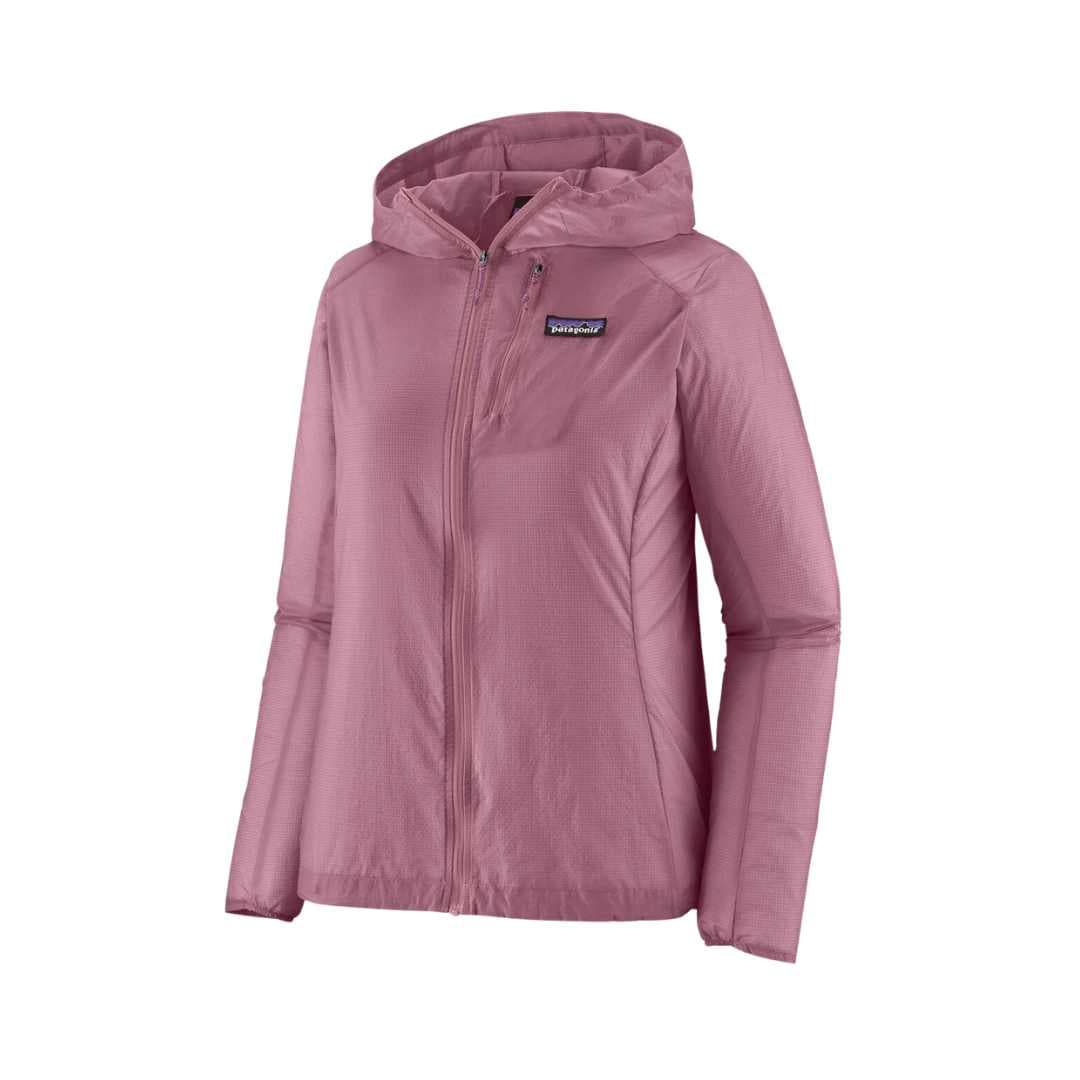
| Windshell | No, water-resistant | Excellent | Low | Running, cycling, extra layer in the rucksack | Patagonia Houdini (1,799 kr) |
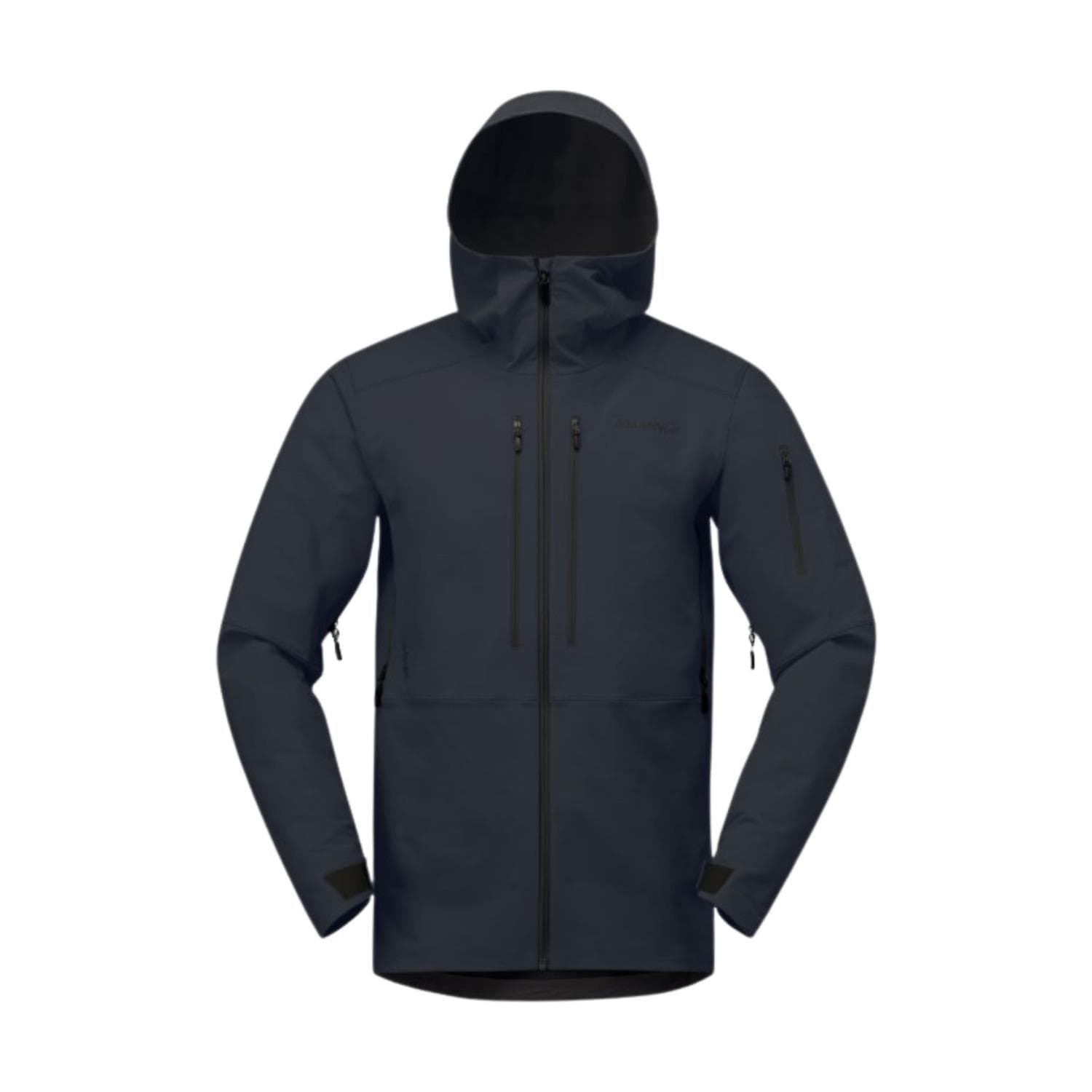
| Softshell | No, handles light precipitation | Excellent | Good | Ski touring, hiking in dry weather | Norrøna lofoten flex1 (3,999 kr) |
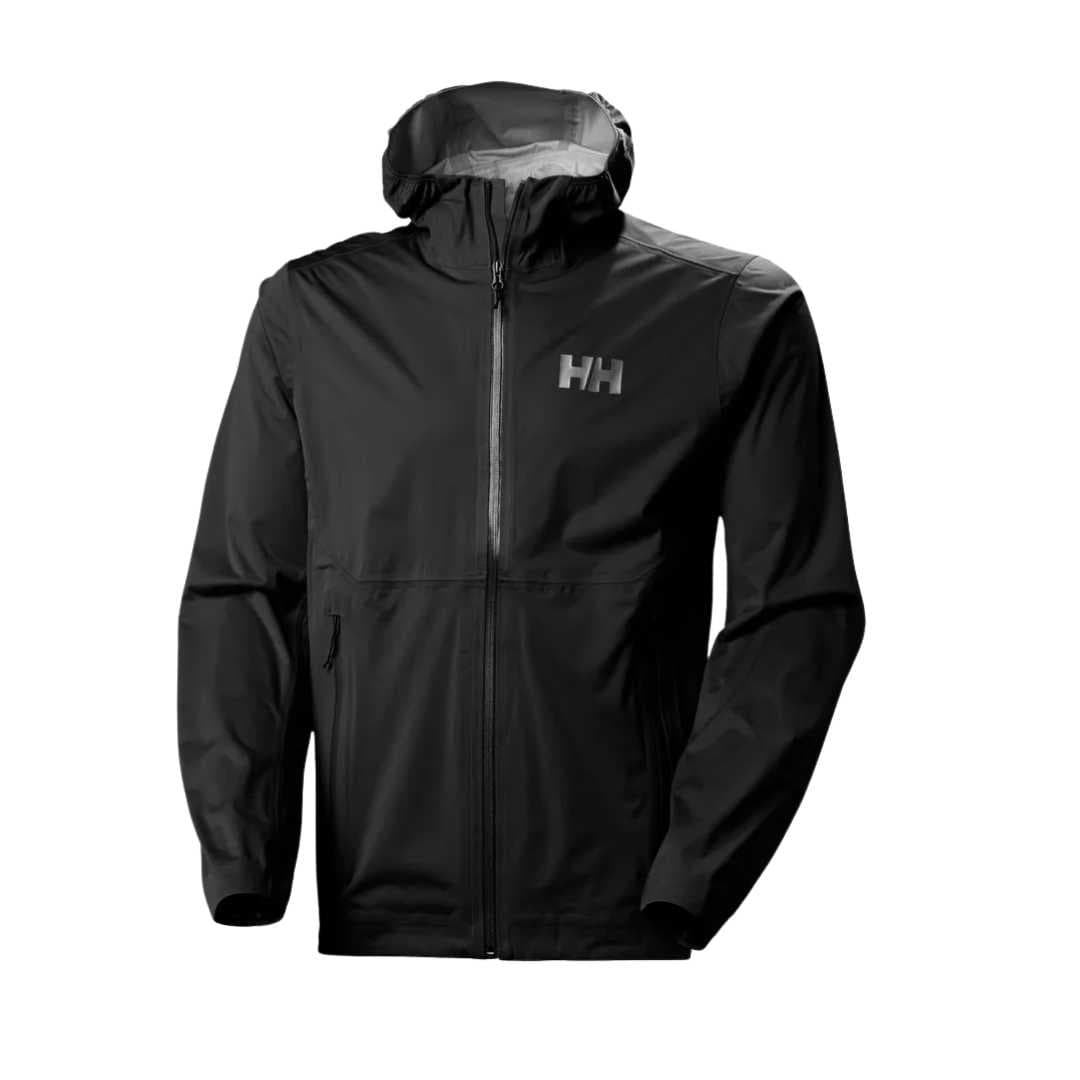
| 2-layer hardshell | Yes | Moderate | Moderate | Everyday use, town, light hiking | Helly Hansen Seven J (1,699 kr) |
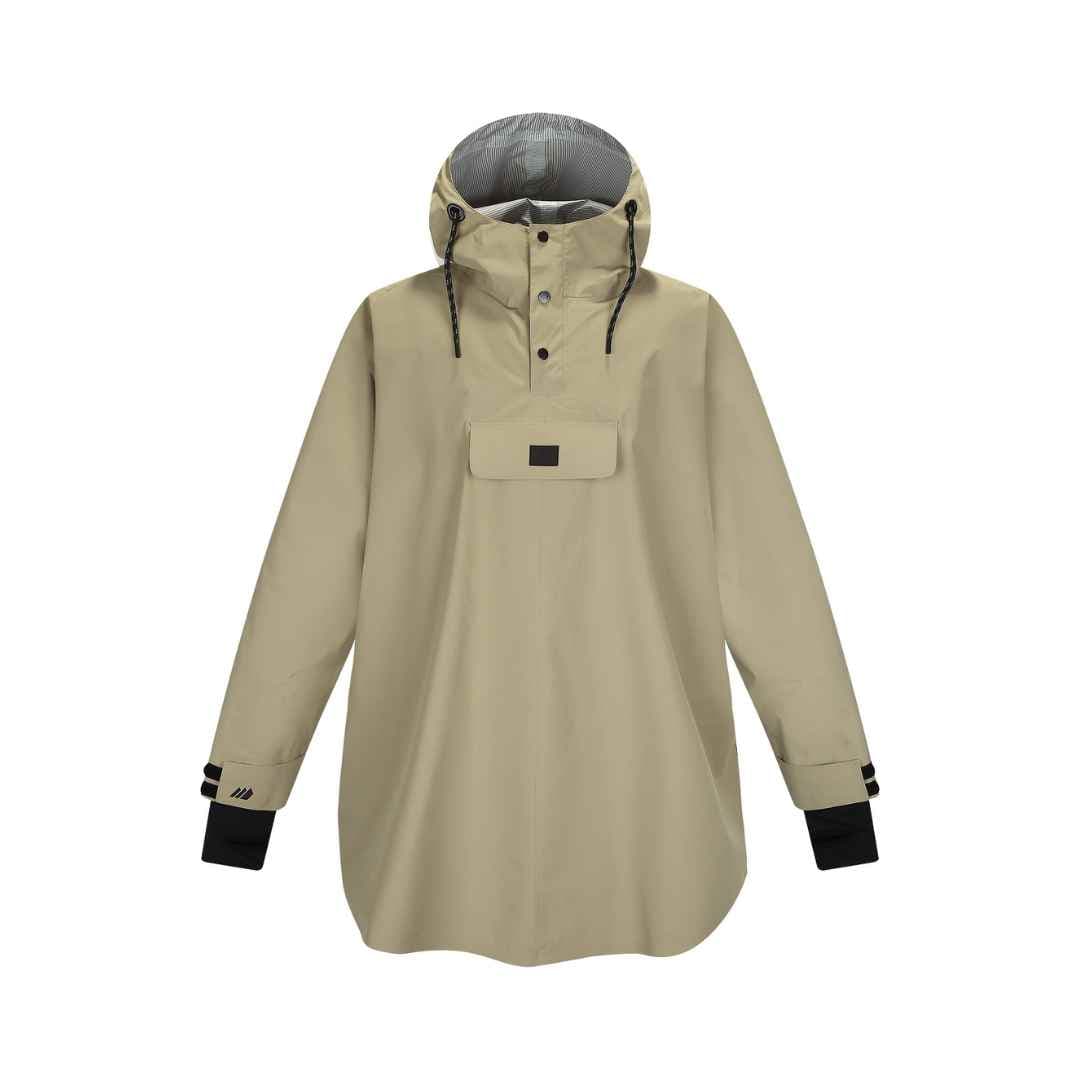
| 2.5-layer hardshell | Yes | Moderate | Low–moderate | Commuting, travel, "in the rucksack just in case" | Skogstad Vefsna 2,5-lags anorakk (1,799 kr) |
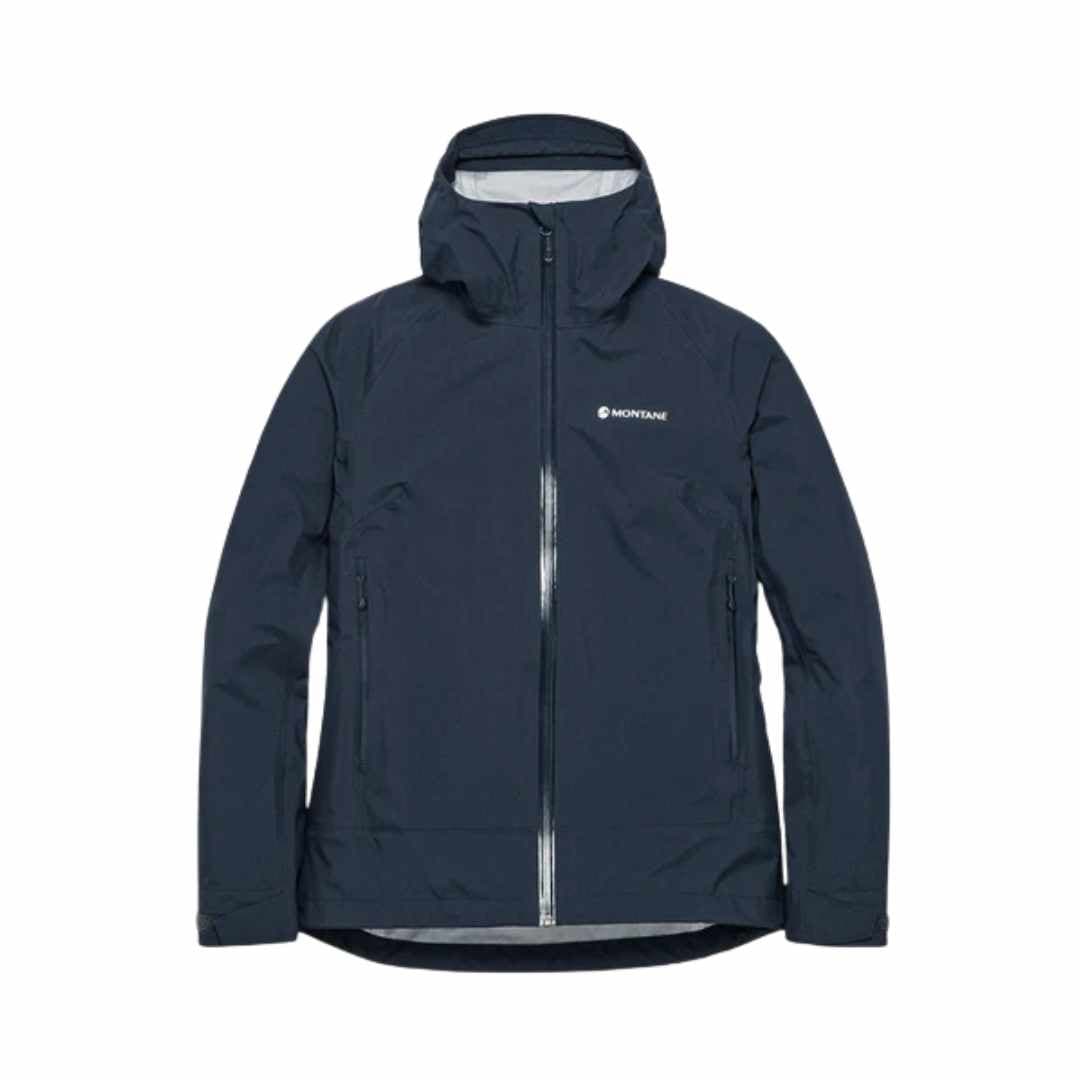
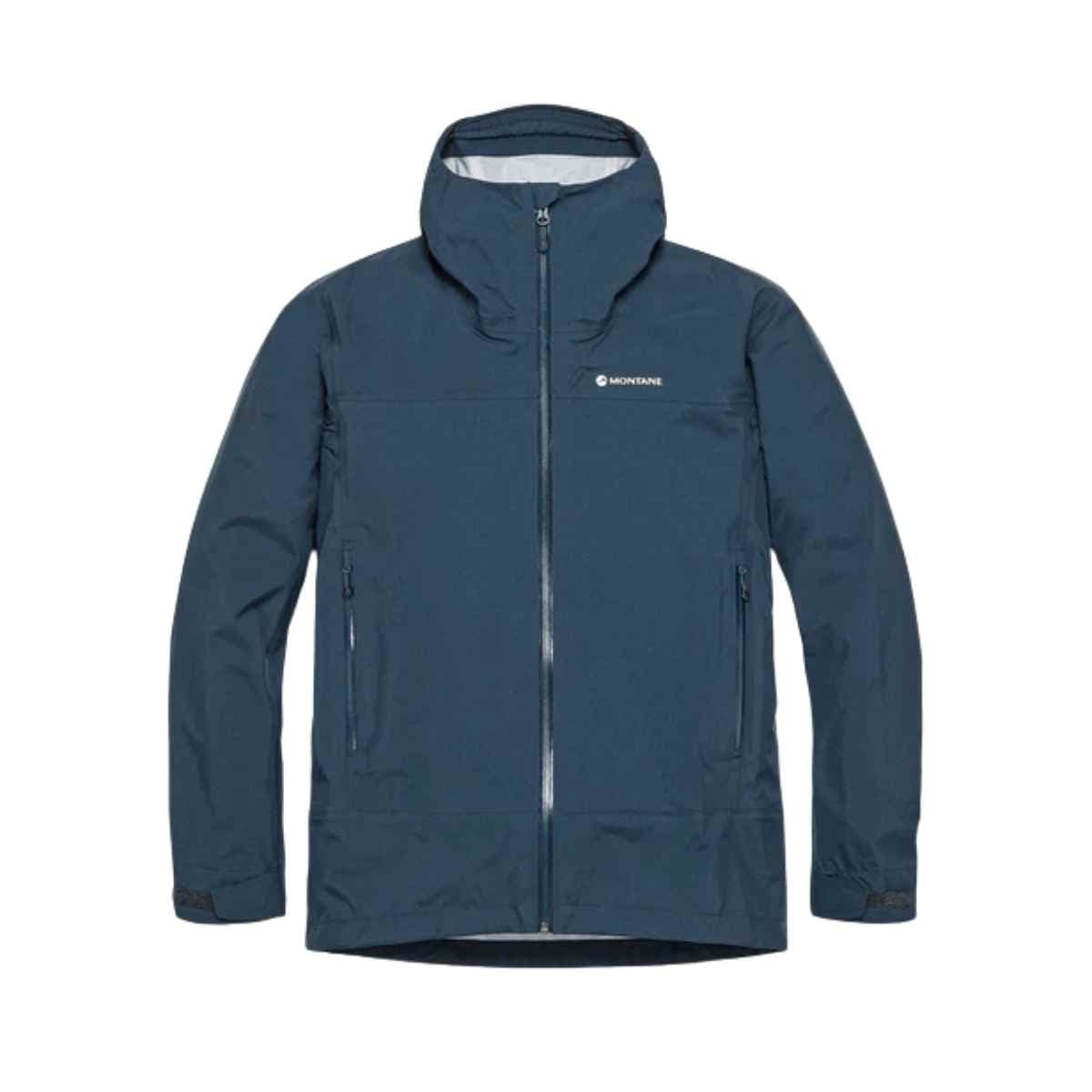
| 3-layer hardshell | Yes | Good | Good | Hiking and mountains all year round, outdoor work | Montane Norste XT (3,299 kr) |
| 3-layer Gore-Tex Pro or equivalent | Yes | Good | Excellent | Heavy use with a rucksack, skiing, climbing | Norrøna trollveggen Gore-Tex Pro, Arc'teryx Beta SV |
Models in the table: Patagonia Houdini women's and men's is an ultralight windshell that packs into its own chest pocket. Norrøna lofoten flex1 men's is windproof but not waterproof, with underarm ventilation. Helly Hansen Seven J men's and women's is a 2-layer jacket in Helly Tech Protection with sealed seams. Skogstad Vefsna is a 2.5-layer anorak with a generous fit. Montane Norste XT men's and women's is a 3-layer jacket in Pertex Shield with underarm ventilation.
If you are looking for something between a hardshell and a softshell, there are shell jackets with stretch fabric. Helly Hansen Momentum 3L Stretch (3 199 kr) is one example: a fully taped three-layer jacket with Helly Tech Protection, but softer and more flexible than a classic hardshell.
Browse the full range: shell jackets women · shell jackets men · hiking jackets women · hiking jackets men · rain jackets women · rain jackets men.
Waterproofing – what do the numbers mean?
Waterproofing is measured in millimetres of water column (mm). The figure indicates how much water pressure the fabric can withstand before it starts to leak.
- 5,000 mm: Handles light rain and snow. Fine for everyday use in town, but not sufficient for the mountains.
- 10,000 mm: Handles proper rain for shorter periods. Fine for shorter trips and commuting.
- 15,000–20,000 mm: Handles heavy rain over longer periods. Recommended for mountain trips and daily use in harsh weather.
- 20,000–28,000 mm: Extremely waterproof. For demanding trips, expeditions and professional use.
For northern Norwegian weather we recommend a minimum of 15,000 mm if you spend a lot of time outdoors. If you are heading into the mountains or working outside all day, 20,000 mm or more is a sound investment.
There is no legally required threshold for when a leisure jacket may be called waterproof, and manufacturers do not always test in the same way. For protective clothing against rain, however, the standard EN ISO 24232 (formerly EN 343) applies, and it sets limits considerably lower than the figures you see in shops, because it uses a different method of measurement. More about this, and about why a rucksack and knees force water through the fabric, can be found in Rain gear and water column explained.
Breathability – just as important as waterproofing
A jacket can be completely waterproof, but if it does not let perspiration escape, you will become just as wet from the inside as you would from the outside. Breathability is most commonly measured as MVTR (Moisture Vapour Transmission Rate) – how much moisture the jacket releases per square metre over 24 hours.
- 5,000 g/m²/24h: Low breathability. Fine for low-activity use.
- 10,000–15,000 g/m²/24h: Good breathability. Suitable for normal trips and everyday use.
- 20,000+ g/m²/24h: Very good breathability. For intense activity and demanding use.
The most important thing is that waterproofing and breathability are reasonably balanced. A jacket with 28,000 mm waterproofing but only 5,000 g/m² breathability will quickly feel clammy during active use.
Membranes explained
The waterproof and breathable material inside the jacket is called the membrane. Here are the membranes you will find with us:
Gore-Tex is the best-known and most widely used in the world. Used by, among others, Arc'teryx, Norrøna, Fjällräven and Helly Hansen. Gore-Tex comes in several variants:
- Gore-Tex Paclite Plus: Light and packable, for short trips and commuting
- Gore-Tex Performance (2L/3L): Robust and breathable, for daily use and the mountains
- Gore-Tex Pro: The most robust, for extreme and professional use
- Gore-Tex Active: Optimised for high activity levels with particularly good breathability
- Gore-Tex ePE: Gore's new membrane made from expanded polyethylene, manufactured without added PFAS
- Gore-Tex Infinium / Windstopper: take note — products with a white Gore label are not necessarily waterproof, only wind- and water-resistant. The waterproof Gore-Tex products carry a black label.
Helly Tech (Helly Hansen) is Helly Hansen's own membrane technology, developed for Nordic climates. Available in three levels:
- Helly Tech Protection: For everyday and lighter hiking use
- Helly Tech Performance: A good balance between waterproofing and breathability
- Helly Tech Professional: Helly Hansen's most advanced – used in professional garments and mountain clothing
Pertex Shield (Montane, Rab) is a thin PU membrane commonly found in lightweight three-layer jackets. Montane quotes 20,000 mm water column and 20,000 g/m²/24h breathability for the Norste XT.
H2No (Patagonia) is Patagonia's own in-house membrane with solid waterproofing and breathability. Used on everything from everyday jackets to expedition garments, and known for good durability and high environmental standards in production.
Eco Shell (Fjällräven) is Fjällräven's own membrane, made from recycled materials and free from harmful PFC substances. Used on several models alongside Gore-Tex, and a good choice if the environment matters to you.
Cutan (Klättermusen): Klättermusen does not use Gore-Tex, but their own Cutan material.
Without PFAS: Gore and several other brands have switched to membranes and DWR treatments without added PFAS. In practice this means the water-repellent surface needs to be refreshed a little more often — see the maintenance section below.
Do not be misled by the name alone: What matters most is the stated waterproofing and breathability – and how many layers the jacket has (2L, 2.5L or 3L). A good own-brand membrane can be just as effective as – or better than – a basic Gore-Tex.
Number of layers – 2L, 2.5L or 3L?
Jackets are often described as 2-layer, 2.5-layer or 3-layer. This refers to how the jacket is constructed.
2-layer (2L): Outer fabric with membrane bonded on, and a separate lining on the inside. Comfortable and affordable, but heavier and less packable. Best for everyday use.
2.5-layer (2.5L): Outer fabric with membrane and a thin protective print on the inside instead of a lining. Light and packable, but can feel slightly clammy and is less resistant to wear. Best for commuting and light hiking.
3-layer (3L): Outer fabric, membrane and inner fabric are bonded together as a single layer. Light, durable and breathable – but more expensive. Best for the mountains and demanding use.
What to look for in a good shell jacket
Beyond waterproofing and breathability, there are several details that set a good shell jacket apart from a mediocre one:
- Sealed seams: All seams should be sealed (taped) to prevent leakage.
- Adjustable hood: Ideally with a stiff peak and the ability to adjust at several points. Should be able to be tightened with one hand.
- Helmet-compatible hood: If you intend to use the jacket for climbing, skiing or cycling.
- Ventilation zips: Underarm zips (pit-zips) let you release heat and moisture quickly.
- Waterproof zips: The main zip should be waterproof or covered by a storm flap.
- Adjustable cuffs: Velcro or a press stud to seal around the wrist.
- Adjustable hem: To prevent cold air from rising up.
- Correctly positioned pockets: Chest pockets are useful – make sure they work with a pack or harness.
- Robust outer fabric: A higher denier (D) rating means thicker and more durable fabric. 40D is standard for hiking, 70D+ for heavy use.
Fit and sizing
A shell jacket should be roomy enough to accommodate a mid-layer (fleece or down jacket) underneath, but not so large that it lets cold air in. Check these points when trying it on:
- Freedom of movement: Raise your arms above your head – the jacket should not ride up over your stomach.
- Length: Should cover your backside, especially if you cycle or wear a harness.
- Sleeve length: The sleeves should cover your wrists even when your arms are stretched forward.
- Shoulders: Should sit comfortably without pinching.
If you are between two sizes, we generally recommend choosing the larger one – this gives more room for layering underneath.
What do you get for your money?
| Price level | Typical construction | What you get | Examples |
|---|---|---|---|
| 1,000–2,000 kr | 2- or 2.5-layer, PU membrane | Waterproof in rain, simple hood, minimal ventilation | Helly Hansen Seven J, Skogstad Vefsna |
| 2,500–4,000 kr | 3-layer with dedicated membrane | Breathable, underarm ventilation, withstands pack use | Montane Norste XT, Patagonia Torrentshell 3L, Helly Hansen Momentum 3L |
| 4,500–6,500 kr | 3-layer Gore-Tex or equivalent | Helmet-compatible hood, pockets above hip belt, long service life | Norrøna falketind Gore-Tex, Arc'teryx Beta SL, Helly Hansen Verglas Infinity |
| 7,000 kr and above | Gore-Tex Pro or similar | Reinforced construction, most durable | Norrøna trollveggen Gore-Tex Pro, Arc'teryx Beta SV og Alpha SV |
From around 4,500 kroner upwards, the choice is more about model and fit than about type. We have done that work for you: Norrøna, Arc'teryx and Patagonia compared.
A good shell jacket is an investment. If you look after it, a jacket costing 5,000 kr can easily last 10 years – that works out at 500 kr a year for dry comfort in all weathers.
Care and maintenance – how to extend the life of your jacket
A shell jacket does not stay waterproof on its own. The outer DWR (Durable Water Repellent) treatment wears down over time, and water starts to soak into the fabric rather than beading off. Here is how to look after your jacket:
- Wash regularly: Dirt and sweat clog the pores in the membrane. Use specialist detergent for technical garments, for example OrganoTex BioCare Sport Textile Wash (219 kr).
- Re-proof: After several washes the DWR coating needs renewing, for example with Nikwax TX.Direct Spray-On (189 kr). The method is described in Vedlikehold av skallbekledning.
- Tumble dry on low heat: The warmth reactivates the DWR coating.
- Avoid fabric softener and washing powder: They leave residues that reduce water repellency and breathability.
- Hang on a good hanger: Never fold for extended periods.
Common mistakes when buying a shell jacket
Mistake 1: Focusing only on waterproofing Breathability is equally important. A jacket that does not breathe will make you wet from the inside.
Mistake 2: Too tight a fit Remember that the jacket needs room for layering underneath. Always try it on with a fleece or thin down jacket beneath.
Mistake 3: Overlooking the hood A hood without adjustment or with a stiff brim performs poorly in wind and rain. Always test the hood before buying.
Mistake 4: Choosing by price rather than intended use Think about how the jacket will be used. A lightweight 2.5-layer commuter jacket wears out quickly under pack straps on long trips, while a heavy mountain jacket is more than you need for everyday use in town.
Mistake 5: Neglecting maintenance Even the most expensive jacket loses its waterproofing without washing and re-proofing. Set aside time for maintenance a couple of times a year.
How to choose the right shell jacket – a brief summary
Ask yourself before you buy:
- What will I use the jacket for? Everyday wear, hiking, mountains, work or a specialist activity?
- How much time do I spend outdoors? Daily use demands better quality than weekend use.
- What weather will I encounter most often? Frequent rain calls for higher waterproofing; active use calls for better breathability.
- What is my budget? See the table above for what you get at each price level.
- What features do I need? Helmet-compatible hood? Ventilation? Extended sleeves for climbing?
Do you know which type you want? See eight shell jackets compared.
Need help choosing?
Come in to one of our shops in Tromsø and we will help you find the right jacket for your needs. We stock a wide range from brands including Arc'teryx, Helly Hansen, Norrøna, Patagonia, Klättermusen and Fjällräven – and we have long experience of what actually works in the climate of northern Norway.
Sources
- GORE-TEX – Care Instructions for outerwear — washing, fabric softener and reactivating the DWR treatment
- GORE-TEX – Durable Water Repellent (DWR) — why the DWR treatment wears down and needs renewing
- GORE-TEX – Next-Gen GORE-TEX Products (ePE) — the ePE membrane without added PFAS
- GORE-TEX – GORE-TEX Pro Garments — Gore-Tex Pro for extreme conditions
- Helly Hansen – Helly Tech — the three levels: Protection, Performance and Professional
- Montane – Norste XT Waterproof Jacket — Pertex Shield, hydrostatic head and breathability
Last checked 19.10.2026.