Who is responsible for workwear, what does the regulations say about protection classes, and what should a clothing list include? The guide for those with OHS or procurement responsibility — from the specialist retailer that has been dressing northern Norwegian workers since 1988.
Workwear is not merely clothing — for many roles it is personal protective equipment underpinned by legal requirements. Even so, the rules are spread across legislation and several regulations, and it is not always obvious what actually applies to your particular workplace.
This guide brings together the essentials: who bears responsibility, what requirements apply to the equipment, what the protection classes mean in practice — and a checklist you can use when drawing up a clothing list.
In brief
- Protective equipment: the employer must make necessary personal protective equipment available, maintain it and replace it — and employees must not pay for it.
- Ordinary work clothing: no general obligation. This is decided by the collective agreement, staff regulations or individual agreement — except in construction, cleaning, and the shipbuilding and shipyard industries, where extended collective agreements require the employer to provide workwear and footwear.
- What is «necessary» is determined by the risk assessment — per role, not per department.
- The equipment must be CE marked, include Norwegian instructions for use, and be accompanied by a declaration of conformity.
- Employees are obliged to use prescribed protective equipment.
What the regulations actually require
The starting point is found in the Working Environment Act § 3-2, second paragraph: where protection cannot be achieved by other means, the employer must ensure that satisfactory personal protective equipment is made available, that employees receive training, and that the equipment is used. What is «necessary» is determined by the risk assessment — this is the very cornerstone of OHS work.
The details are set out in the Regulations on Organisation, Management and Participation, Chapter 15: § 15-1 (the employer makes the equipment available and ensures it is used), § 15-3 (requirements for the equipment, including CE marking and that it fits the user), § 15-4 (storage, maintenance, repair and replacement) and § 15-5 (information and training). Employees are obliged to use prescribed protective equipment under the Working Environment Act § 2-3.
In practice this means: map the hazards per role — not per department — and let the requirements drive procurement. A carpenter, a driver and a warehouse operative at the same company may have entirely different requirements for footwear, visibility and clothing.
Who pays — and what must accompany the equipment
Personal protective equipment is paid for by the employer. This follows from the EU directive on the use of protective equipment, on which the regulations are based, and applies to maintenance and replacement as well — equipment that is worn, damaged or has lost its protective capability must be replaced at the employer's expense.
Ordinary work clothing is a different matter. As a general rule, this is decided by the collective agreement, the staff regulations or internal agreements. The exception is construction, cleaning, and the shipbuilding and shipyard industries, where extended collective agreements oblige the employer to provide necessary workwear and footwear suited to the work.
Equipment that is purchased must be CE marked, include Norwegian instructions for use, and be accompanied by a declaration of conformity. It is the responsibility of the manufacturer and supplier to provide these — but the employer's responsibility to verify that they are in place. When you purchase from a specialist retailer, this should be in order as a matter of course.
The declaration of conformity may be included with the product, or be available at a web address stated in the instructions for use.
Do not overlook training either: employees must know when the equipment is to be used, how to use it correctly, and how to recognise when it is time to replace it.
Work clothing or protective equipment — what is the difference?
Not all workwear is protective equipment. What protects against a hazard identified by the risk assessment — high-visibility clothing, safety footwear, rain gear and cold-weather clothing to a standard, hearing protection, gloves — is personal protective equipment, and the requirements above apply. Ordinary work trousers, branded clothing and logo T-shirts are not, and in those cases it is the agreement, the collective agreement or the staff regulations that determine who pays.
Which standards apply to what?
| Risk | Standard | What it means |
|---|---|---|
| Traffic and vehicles | EN ISO 20471 | High-visibility clothing in class 1, 2 or 3 |
| Falling objects, nails | EN ISO 20345 | Safety footwear SB and S1–S7 |
| Rain and moisture | EN 343 (now EN ISO 24232) | Class 1–4 for waterproofness and breathability |
| Cold, −5 °C and below | EN 342 | Suits and ensembles against cold (temperature, moisture and wind) |
| Cool environments above −5 °C | EN 14058 | Jackets, waistcoats and trousers for cool conditions |
| Brief contact with small flames | EN ISO 14116 | Limited flame spread — not heat protection |
Read more: Hi-vis class 1, 2 and 3 explained · Safety footwear: the safety classes explained · Safety footwear: 7 models compared · Rain gear and water column explained · Working outdoors in cold and darkness.
Browse the range: hi-vis visibility · safety footwear · workwear rain gear · lined winter jackets · boilersuits.
High-visibility clothing: class 1, 2 and 3 (EN ISO 20471)
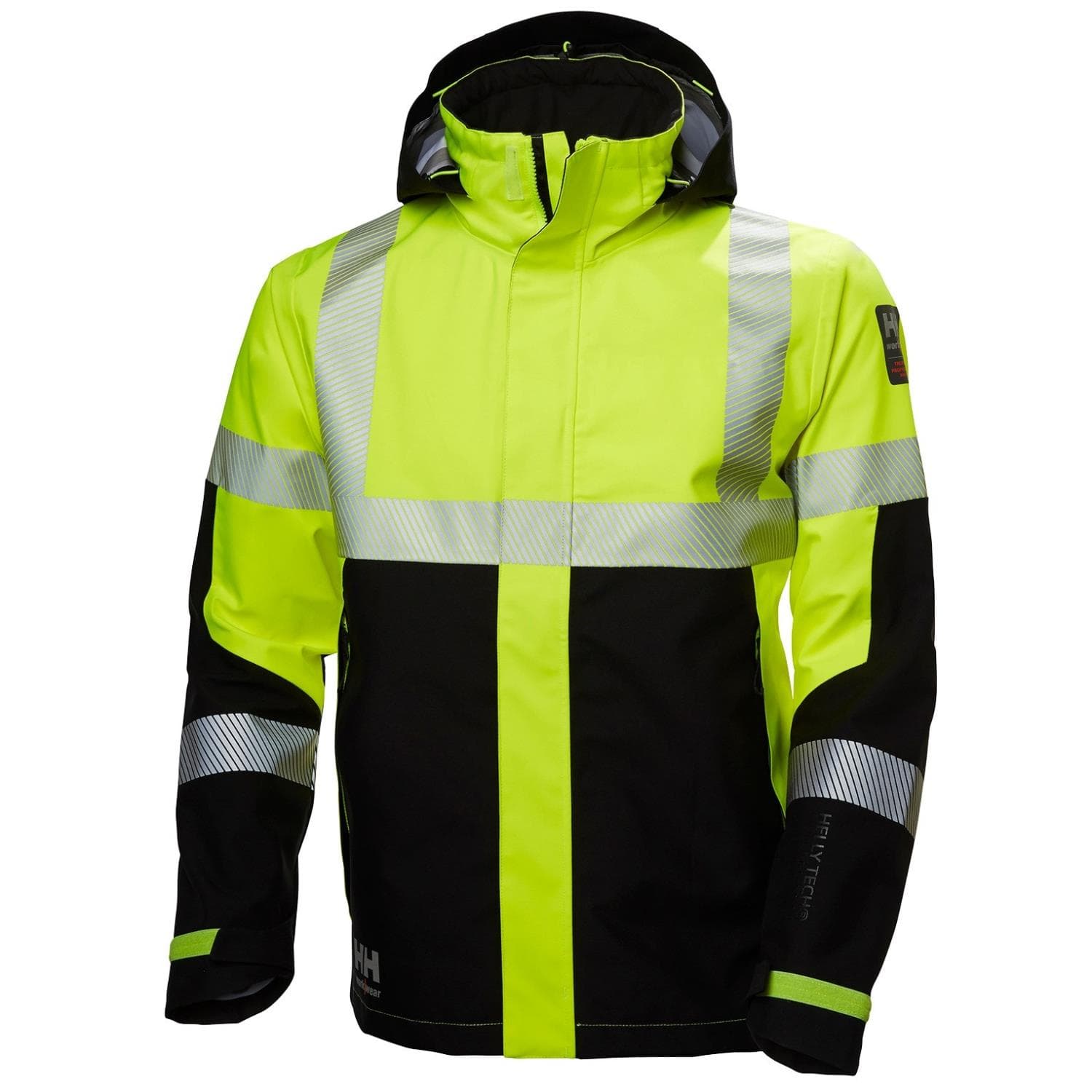
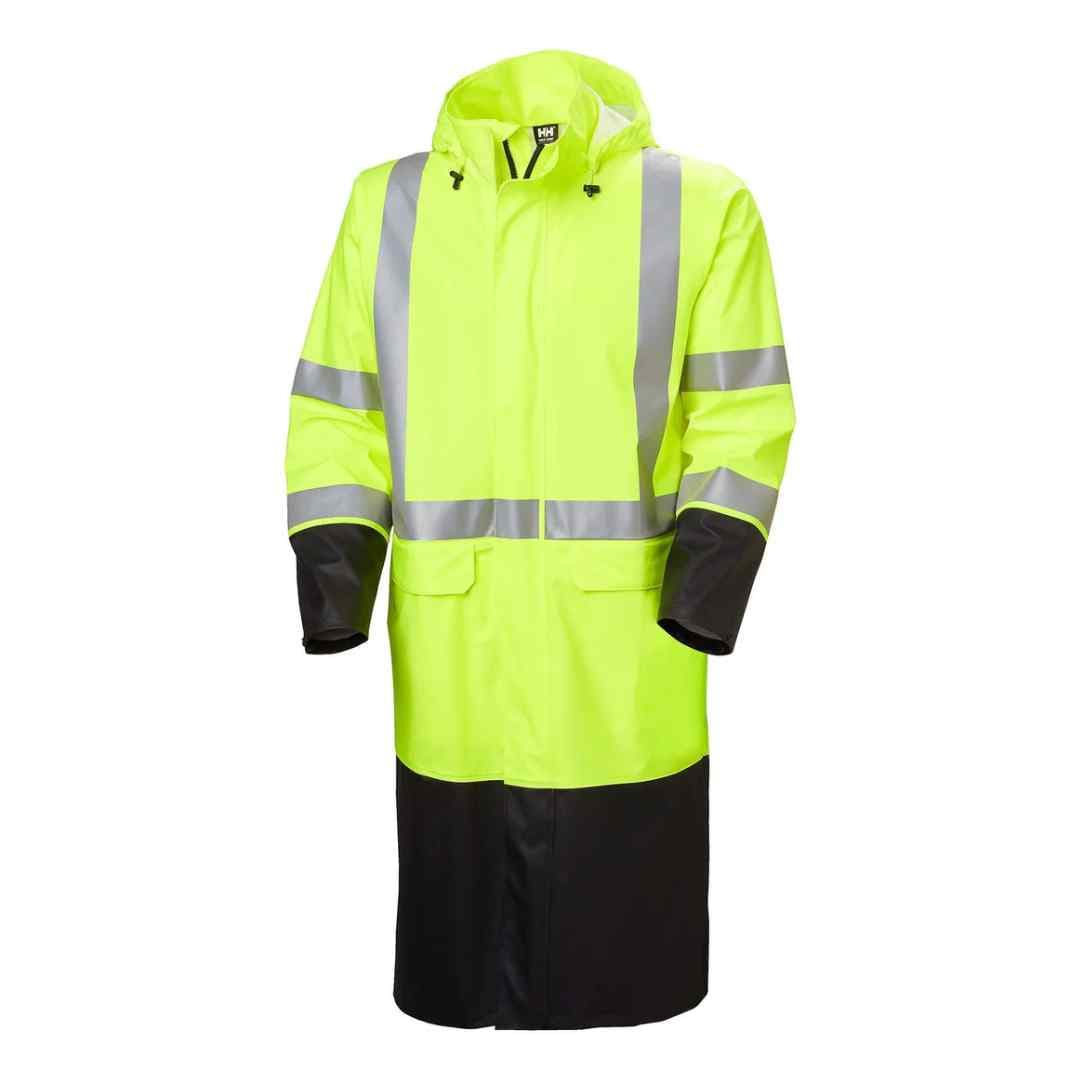
High-visibility clothing is certified to EN ISO 20471 in three classes according to how much fluorescent material and reflective tape the garment has. The class can be achieved by combining garments — but only combinations the manufacturer has certified. The class may also depend on the size: Helly Hansen ICU Hi Vis 3 Layer Shell is, according to the product data, class 3 in size L and class 2 in S–M. Which class is required for which work, and how to maintain the class, is explained in Hi-vis class 1, 2 and 3 explained.
Roadside work: If you are working on or alongside a public road open to traffic, the Norwegian Public Roads Administration requires high-visibility clothing in class 3 to EN ISO 20471. The requirement came with NA circular 2015/12, which amended handbook N301 Arbeid på og ved veg.
Visibility also has a shelf life. Fluorescence fades and reflective tape wears with washing and use, so garments must be replaced before they fall below the requirement — not when they look "worn enough". The maximum number of wash cycles is stated in the garment's care instructions.
Browse the range: hi-vis visibility jackets · hi-vis visibility trousers · the visibility category page.
Safety footwear: the S classes explained (EN ISO 20345)
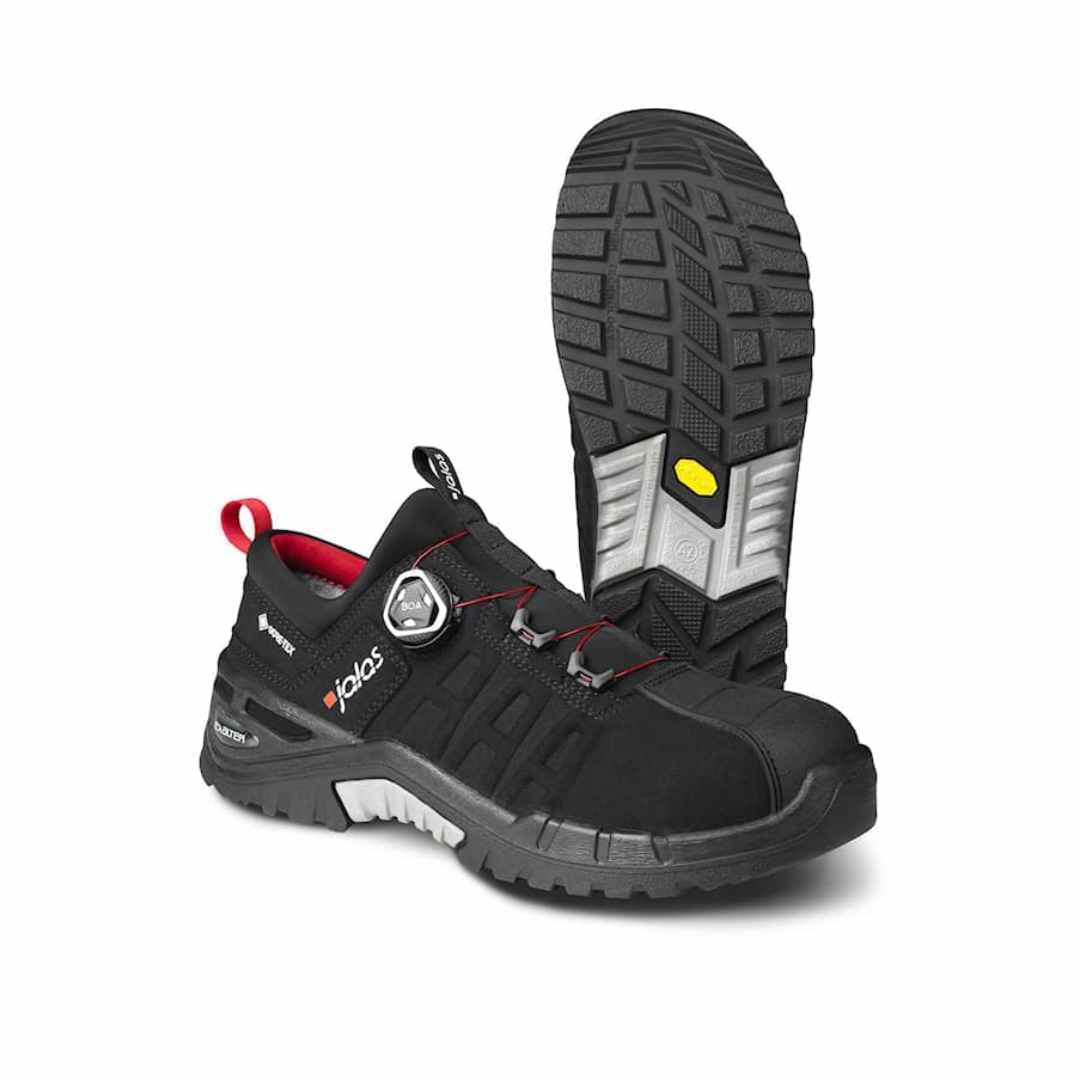
Protective footwear is certified to EN ISO 20345. All classes have a toecap that withstands 200 joules — the difference lies in what the shoe protects against beyond that.
- SB: the basic requirement — a toecap that withstands 200 joules.
- S1: SB plus closed heel, antistatic properties and energy absorption in the heel. For indoor and dry environments. A fuel-resistant outsole (FO) is an optional addition under the 2022 edition of the standard, not part of S1.
- S1P, S1PS and S1PL: S1 plus penetration resistance (P = metal, PS and PL = metal-free). A common choice in light industry and warehousing.
- S2: S1 plus a water-resistant upper. For outdoor work and wet environments.
- S3, S3S and S3L: S2 plus penetration resistance and a cleated outsole. The standard choice on construction sites.
The 2022 revision of the standard also introduced S6 and S7 — in practice S2 and S3 with a requirement that the entire shoe is waterproof. For the wet conditions of northern Norway, that is worth looking out for. Penetration protection is also available in both steel and metal-free versions — metal-free midsoles are lighter and insulate better against cold.
Choose the class based on the risk assessment, not out of habit: a construction site normally means S3, a workshop or warehouse can often manage with S1P, and in wet outdoor conditions S7 or safety boots are the right choice. And a safety shoe that does not fit will stay in the locker room — fit and trying on are health and safety matters too.
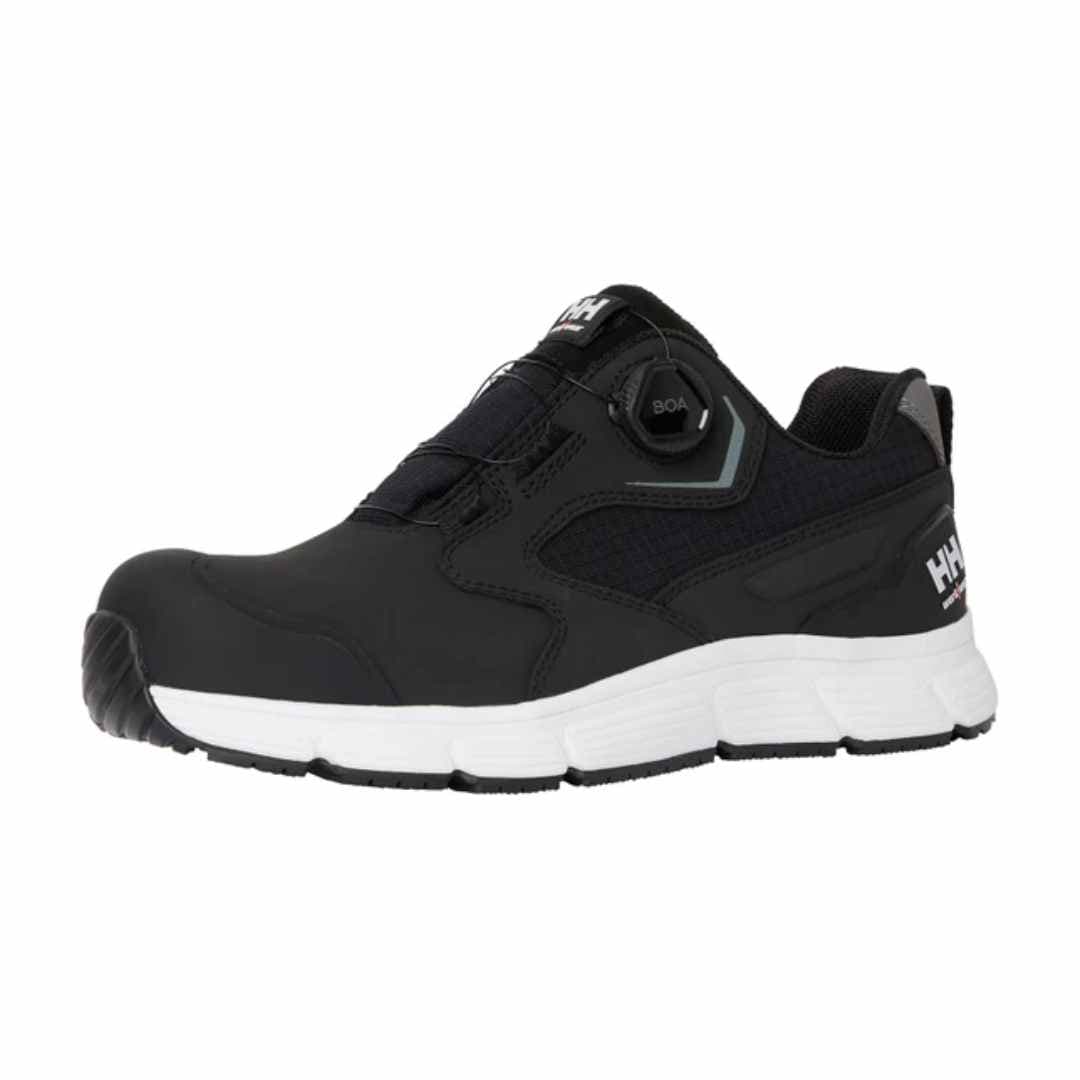
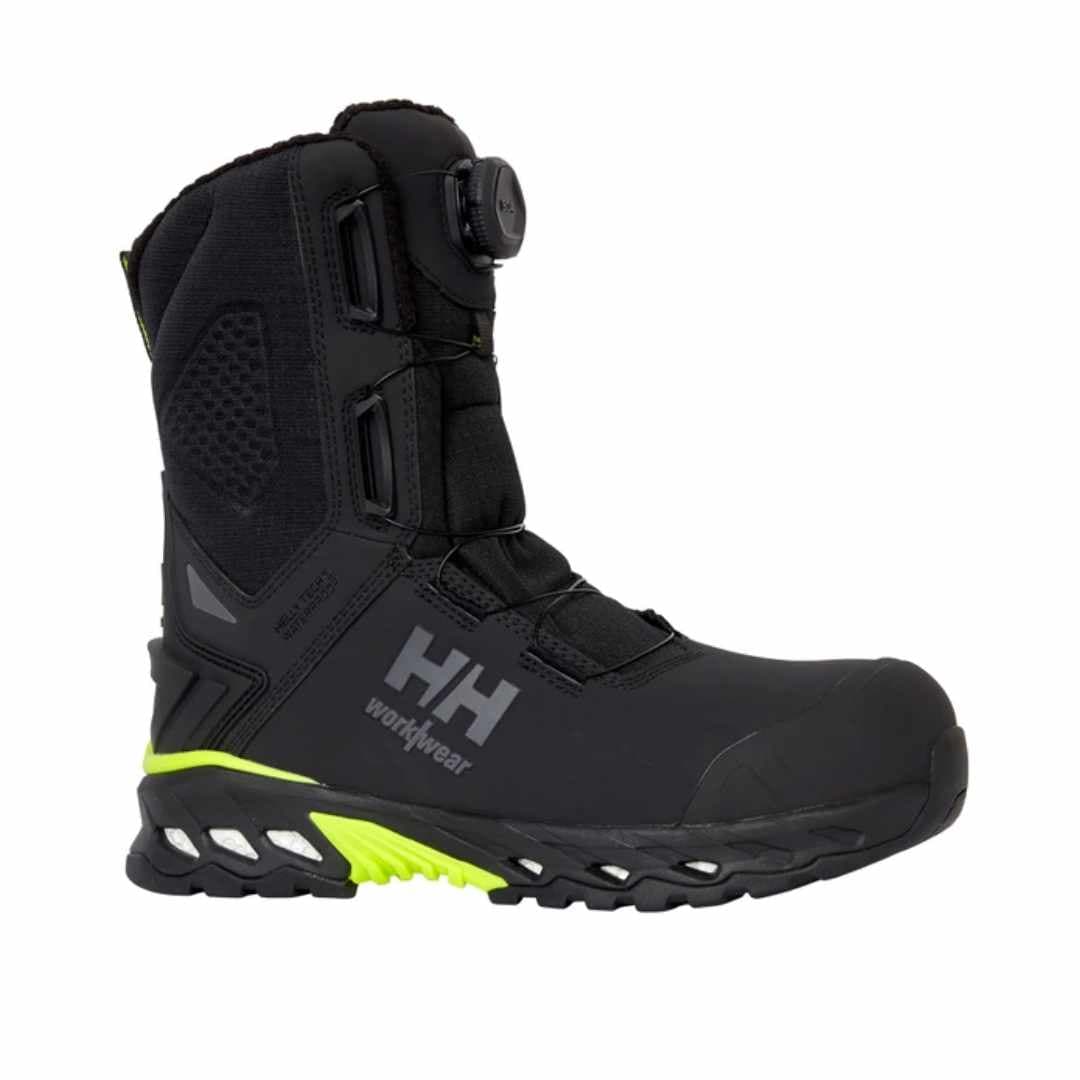
Examples from the shelves: Helly Hansen Kensington MXR Low BOA S3L (3 124 kr, lightweight S3 with metal-free penetration resistance) and Helly Hansen Magni EVO Winter Tall BOA S7L (4 624 kr, insulated and waterproof winter safety boot). The classes explained in detail: Safety footwear: the safety classes explained. Seven models side by side: Safety footwear compared. Safety footwear can be tried on at Bedriftssenteret in Kvaløyvegen 329.
Weather and cold are health and safety matters too
The Working Environment Act requires a fully satisfactory working environment with regard to climate as well. For outdoor work in northern Norway, that is no formality: cold, wind and precipitation affect both safety, concentration and sickness absence.
Rain gear is certified to EN 343 (now EN ISO 24232, with the same classes), and clothing against cold to EN 342. But just as important as the certificates is the system: layering with wool next to the skin, insulation in the middle, and a windproof and waterproof outer layer. Cotton next to the skin is the classic mistake — wet cotton against the skin in sub-zero temperatures is a hypothermia risk, not merely uncomfortable.
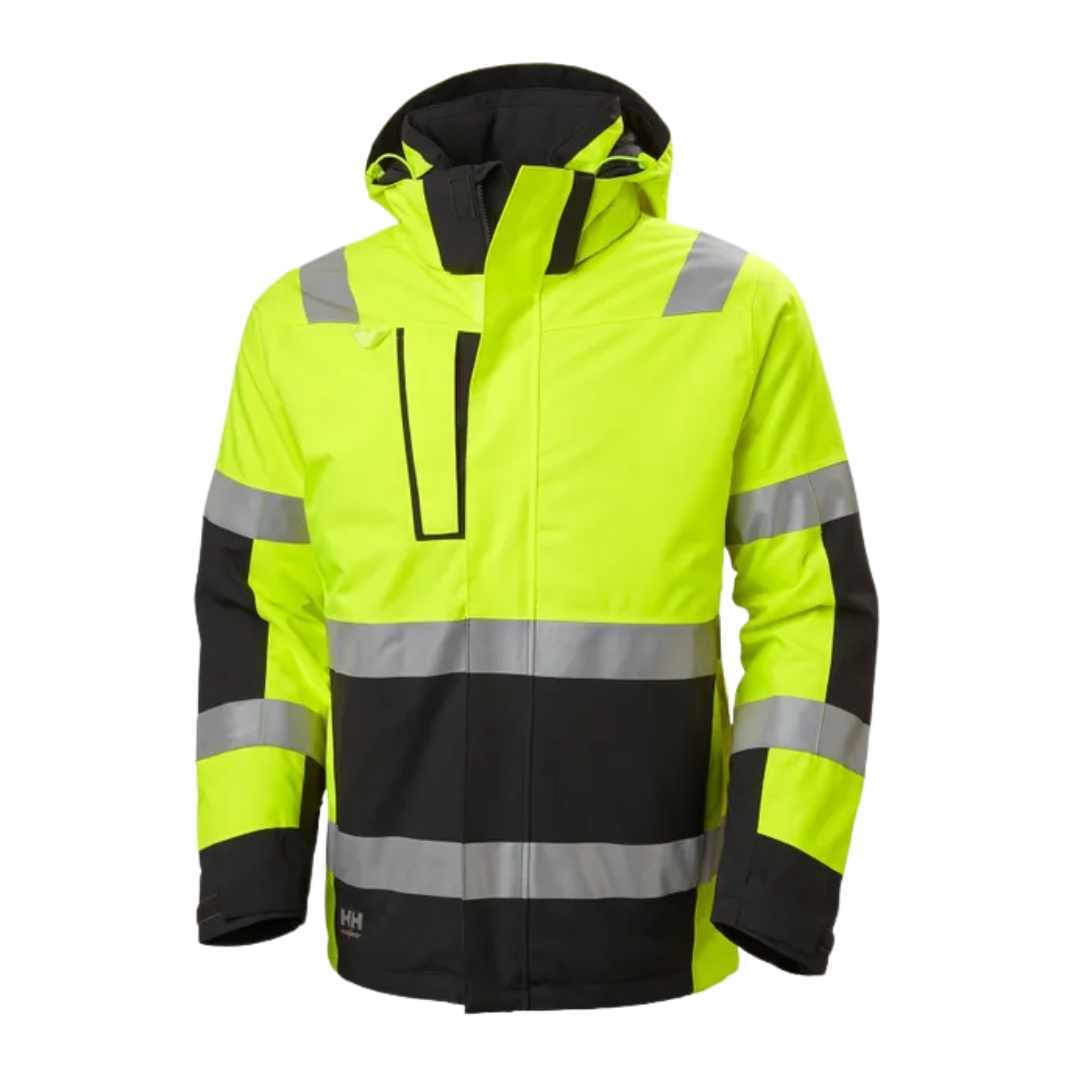
An example of how the standards are combined in a single garment: Helly Hansen Alna 2.0 Winter Jacket (3 749 kr) is, according to the product data, certified for visibility (EN ISO 20471), rain (EN 343) and cold (EN 342). See more under lined winter jackets.
We have been clothing workers for northern Norwegian weather since 1988, and this is perhaps the area where sound expertise makes the greatest difference to both health and safety and wellbeing.
Checklist for those with health and safety responsibility
- Carry out a risk assessment per role — what hazards are present, what requirements apply.
- Draw up a clothing list per role with specific protection classes (for example S3 footwear and class 3 visibility for road work).
- Check CE marking, Norwegian instructions for use and declaration of conformity on everything purchased.
- Ensure training in correct use — and document it.
- Establish a routine for maintenance and replacement, including high-visibility clothing that has lost its effectiveness.
- Involve the safety representative in the selection and evaluation of equipment.
- Document assessments, choices and routines in the internal control system.
Are you setting up or renewing your clothing list? We help companies throughout the country translate health and safety requirements into specific garments per role — with corporate discounts, invoiced payment and a dedicated contact person. Request a no-obligation quote — or call us on 77 68 64 85. Here is how a corporate workwear agreement works.
Sources
- Lovdata – Working Environment Act § 3-2 — the employer shall make personal protective equipment available and ensure that it is used
- Lovdata – Working Environment Act § 2-3 — the employee's duty to use required protective equipment
- Lovdata – Regulations on organisation, management and participation, chapter 15 — selection, CE marking, maintenance and replacement of protective equipment
- Arbeidstilsynet – Work Clothing — who provides work clothing, and the collective agreement exemptions
- Arbeidstilsynet – Personal Protective Equipment — CE marking, instructions for use and declaration of conformity
- Statens vegvesen – NA-rundskriv 2015/12 — class 3 requirements for high-visibility clothing when working on roads
Last checked 19.10.2026.