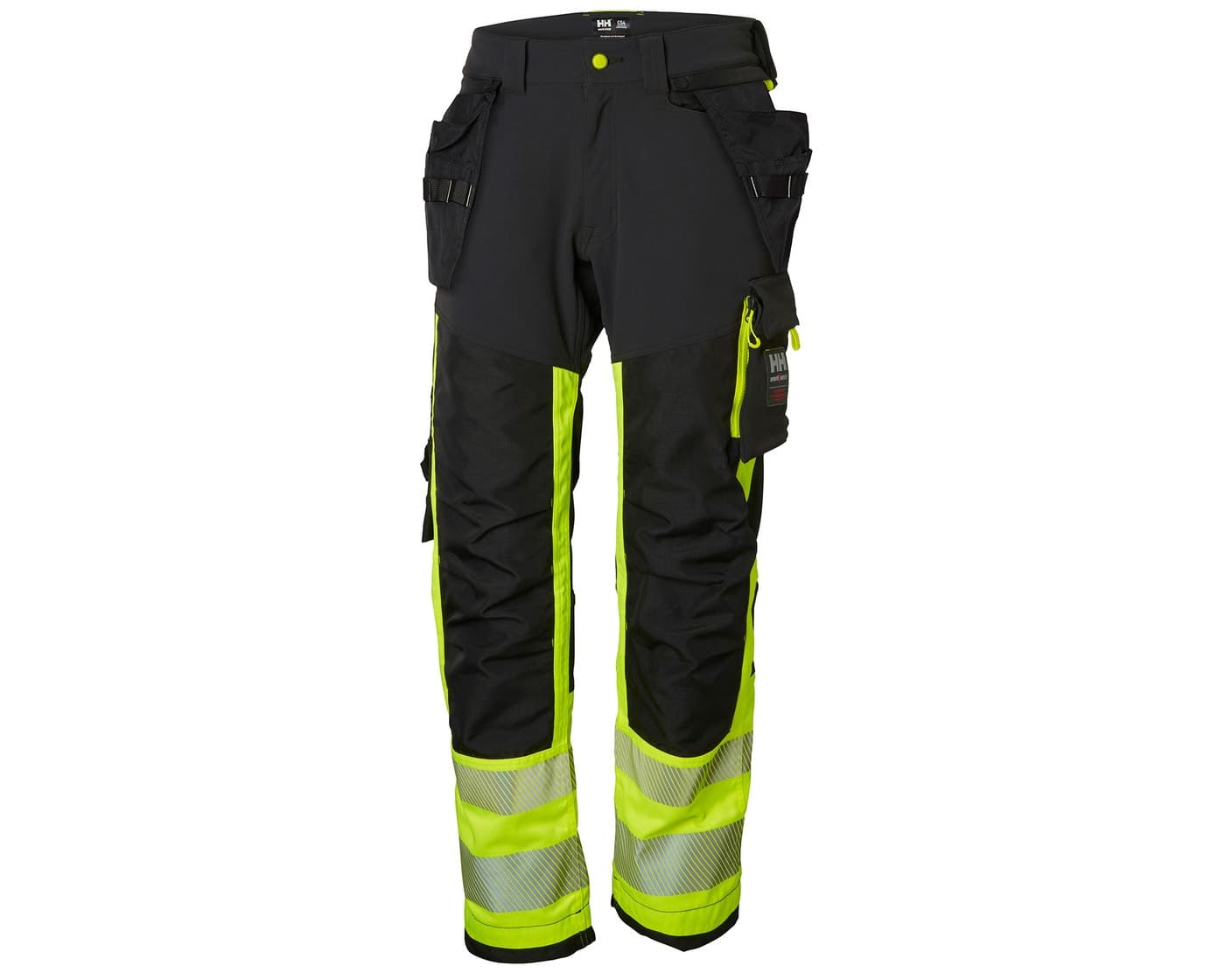
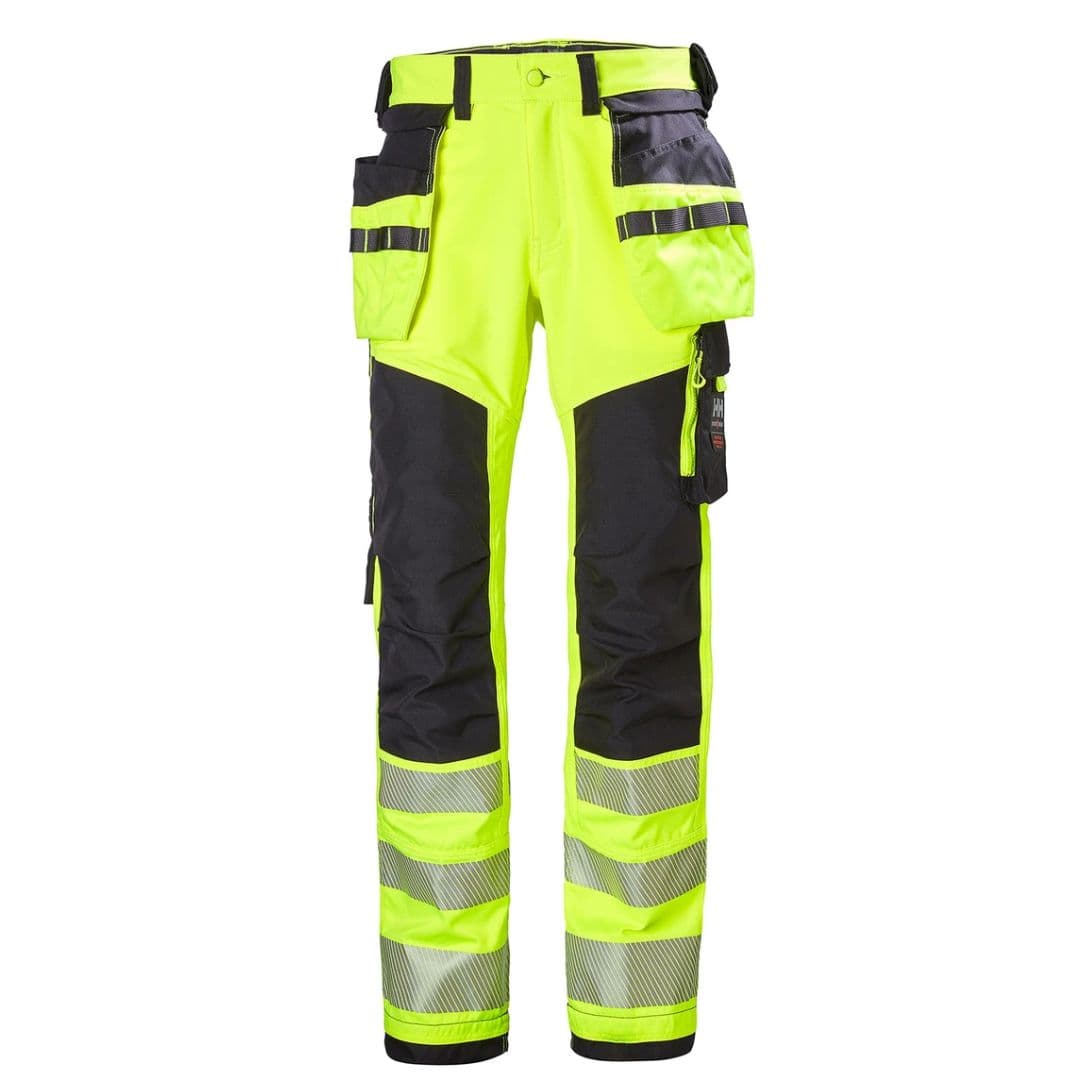
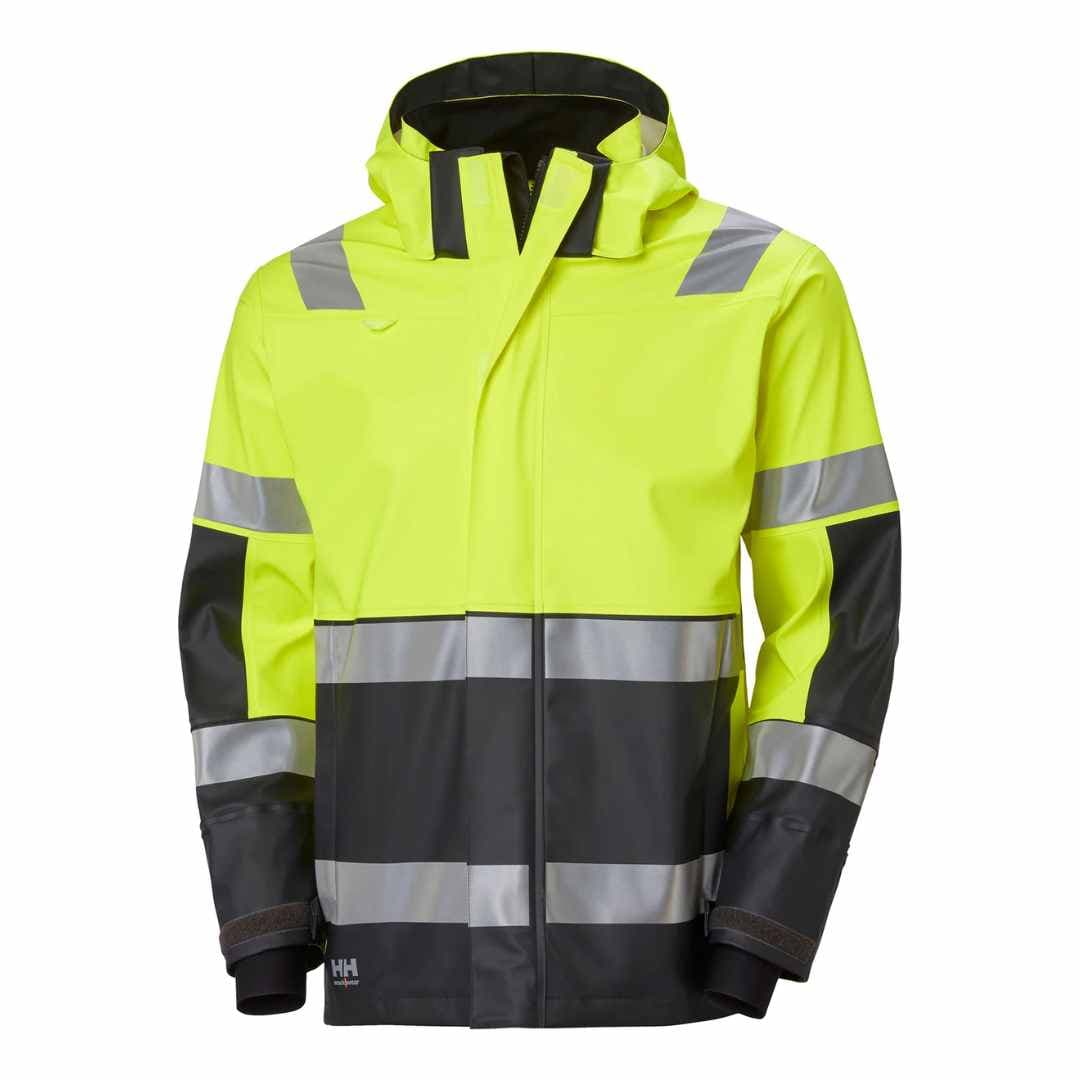
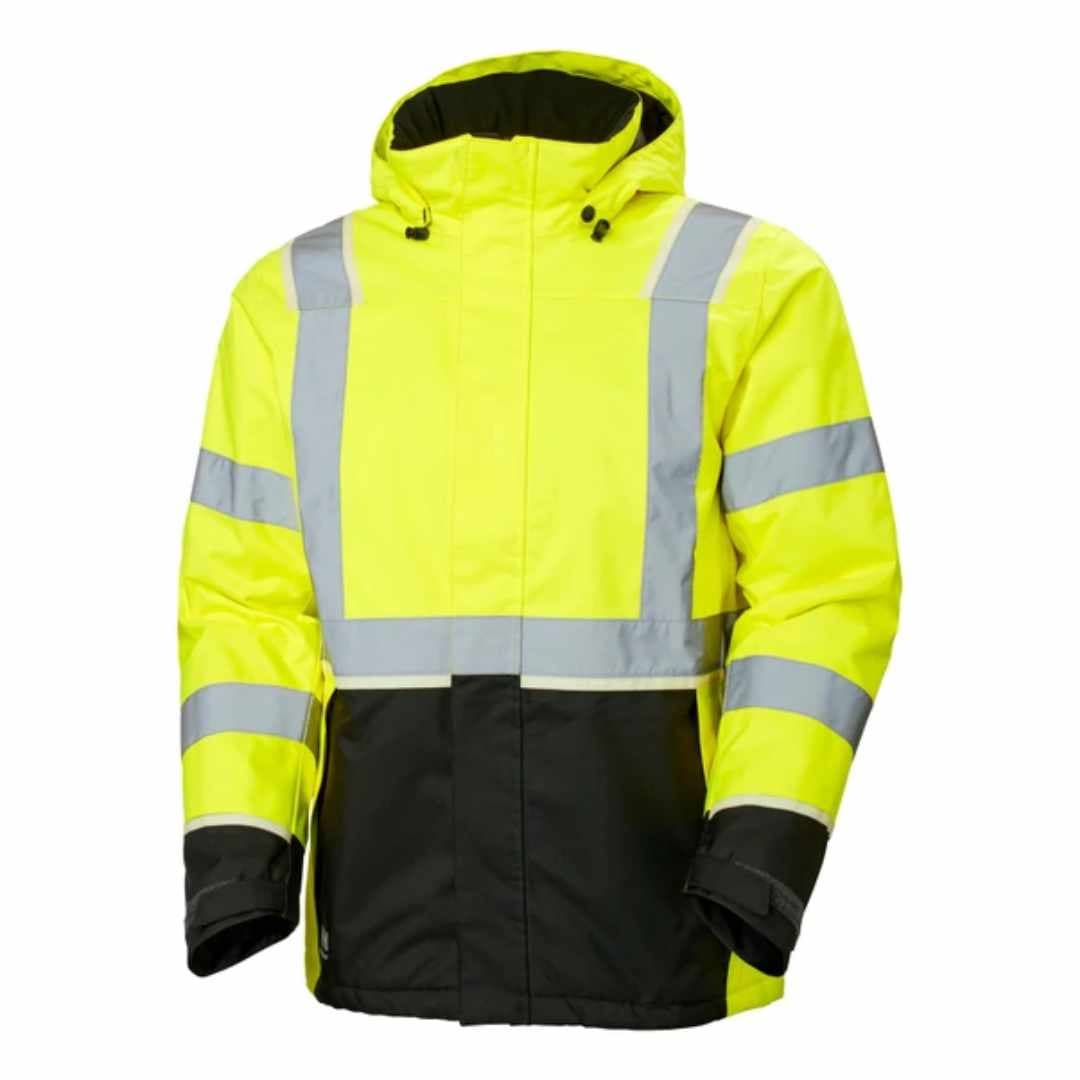
The class of a high-visibility garment is determined by how many square metres of fluorescent fabric and reflective material it has — not by how brightly the colour glows. Here is what class 1, 2 and 3 mean in practice, and why it matters even more when the sun disappears for two months.
In brief
- EN ISO 20471 divides high-visibility clothing into three classes based on area: class 3 has the most fluorescent fabric and reflective material, class 1 the least.
- Class 3 requires at least 0.80 m² of fluorescent material and 0.20 m² of reflective material. The garment must cover the upper body and have reflective material on the sleeves or trouser legs.
- Two garments can together achieve class 3 — for example a class 2 jacket and a class 1 trouser — but only when the manufacturer has certified the combination.
- The class can depend on the size. A jacket in small has less fabric and may fall one class lower than the same jacket in large.
- In the dark it is the reflective material that works, not the colour. Dirty, worn or covered garments no longer meet the class marked on their label.
What is EN ISO 20471?
EN ISO 20471 is the European standard for high-visibility clothing for occupational use. It sets requirements for three things: the fluorescent material (which makes you visible in daylight and dusk), the reflective material (which returns light from headlamps in the dark), and how the two are positioned on the garment.
Only three fluorescent colours are approved: yellow, orange and red. The reflective bands must run around the body, arms and legs so that a driver can see the outline of a person in motion — not just a bright patch of light.
The standard replaced the old EN 471 in 2013. If you find garments marked EN 471 in your wardrobe, they are old enough to be replaced.
What is the difference between class 1, 2 and 3?
The difference is the minimum area of visible material:
| Class | Fluorescent material | Reflective material | Typical garments |
|---|---|---|---|
| 1 | 0.14 m² | 0.10 m² | Trousers, shorts, hooded jackets with hi-vis panels |
| 2 | 0.50 m² | 0.13 m² | Vests, jackets with dark contrast panels, trousers with large hi-vis areas |
| 3 | 0.80 m² | 0.20 m² | Jackets with long sleeves, parkas, coveralls — or certified combinations |
For class 3 there is an additional requirement: the garment must cover the upper body and have either sleeves with reflective material or long trouser legs with reflective material. A vest therefore cannot be class 3 on its own.
When do you need which class?
The standard does not state which class a particular job requires. That is for the employer's risk assessment to determine, and contractors and clients often have their own requirements. As a rule of thumb:
- Class 1: low risk. Areas without regular traffic, where vehicles move slowly. Most often used as the trouser element in a combination.
- Class 2: medium risk. Warehouses and terminals with forklift trucks, construction sites with plant traffic, goods delivery.
- Class 3: high risk. Work on and alongside busy roads, railways, ports and airports, and all work in the dark or in poor visibility where vehicles are travelling at speed.
For work on and alongside roads, Statens vegvesen sets requirements for visibility class in handbook N301 — check the requirement for your assignment. Also refer to what the contract or traffic management plan states.
Why does class matter more during the polar night?
Fluorescent colour works by converting invisible UV light into visible light. It is therefore highly effective in daylight, fog and dusk — and completely ineffective when it is fully dark. In those conditions, only the reflective material does the job.
In Tromsø and the rest of Northern Norway, a large part of the working day takes place in darkness from November through to late January. This has three practical consequences:
- Reflective area matters most. Class 3 has twice as much reflective material as class 1.
- Reflective material on legs and arms makes a significant difference. Movement is what causes a driver to recognise that a point of light is a person.
- Snow, salt and slush spray cover the reflective material. A dirty class 3 jacket can in practice perform worse than a clean class 2 one.
How to stay warm under your high-visibility clothing is covered in Jobbe ute i kulde og mørketid.
Can you combine two garments to achieve class 3?
Yes, but only when the manufacturer has had the combination certified. The label or product data sheet states which garments can be combined. One example from our range: the Helly Hansen ICU BRZ jacket is class 2 on its own, and class 3 when worn with a specific trouser from the same series.
Two arbitrary class 2 garments do not automatically become class 3. If you are unsure, the label and the manufacturer's product data sheet are the authoritative source.
Why does the class vary with size?
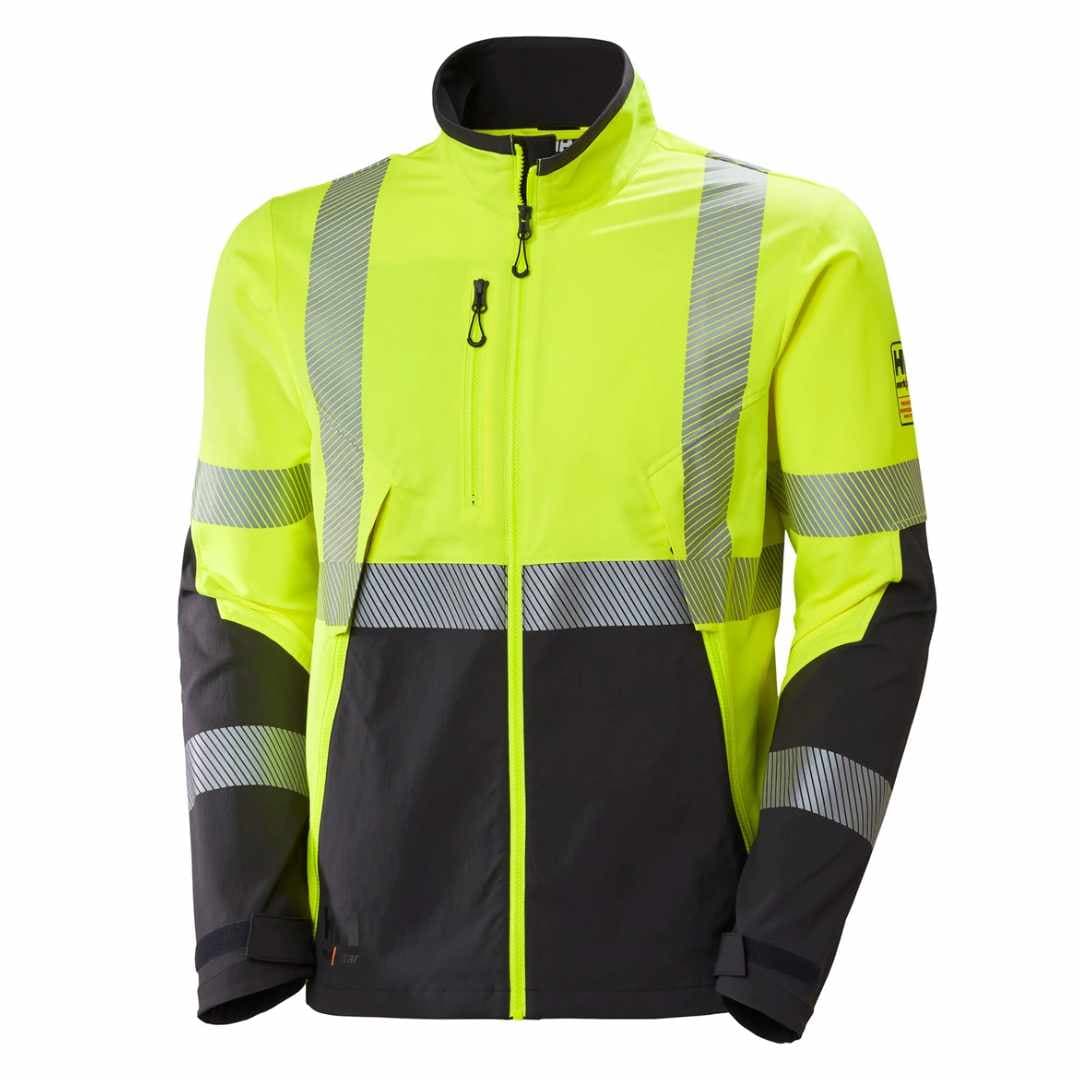
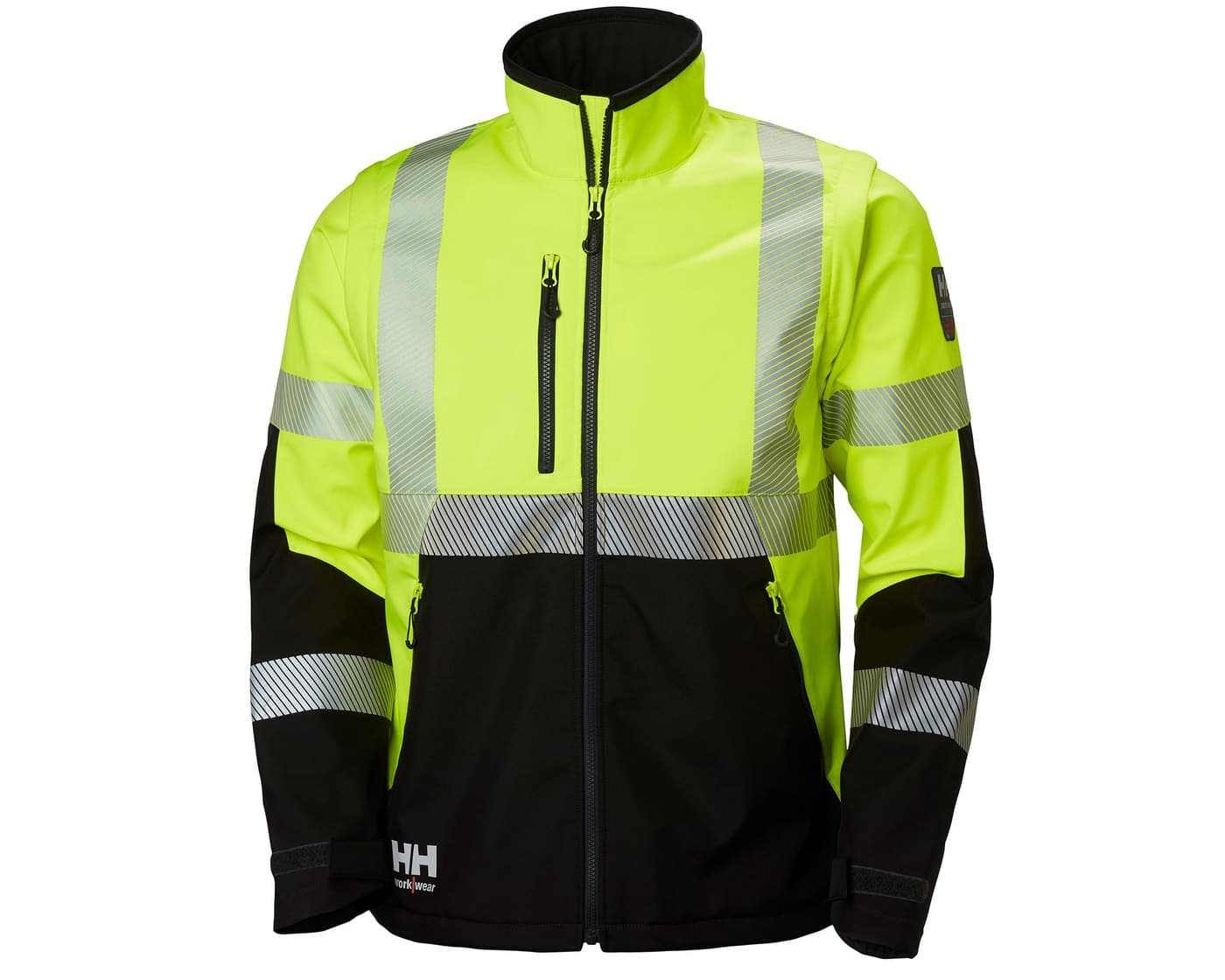
Because the requirement is stated in square metres, not as a percentage. A small jacket simply has less fabric. Helly Hansen ICU Hi Vis Softshell is a good example: with the sleeves attached it is certified as class 3 in size M and class 2 in size S. Remove the sleeves and it drops to class 2 (M) and class 1 (S).
The same applies to garments listed as 'class 2/3 by size' in the table below: the smallest sizes have a smaller reflective and fluorescent area and are certified to class 2, the larger sizes to class 3. If you wear small sizes and need class 3, you must check the labelling for your exact size.
Garments from our stock, sorted by class
| Model | Brand | Class and features | Suitable for | Price |
|---|---|---|---|---|
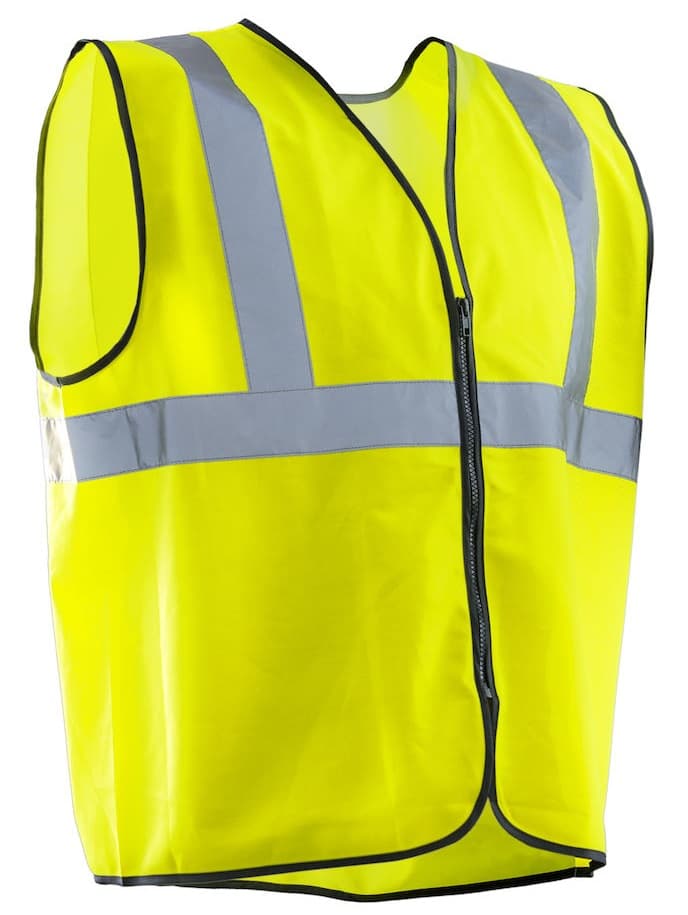
| 7586 Refleksvest | Jobman | Class 2. Zip fastening | Visitors, drivers, keeping in the car | 199 kr |
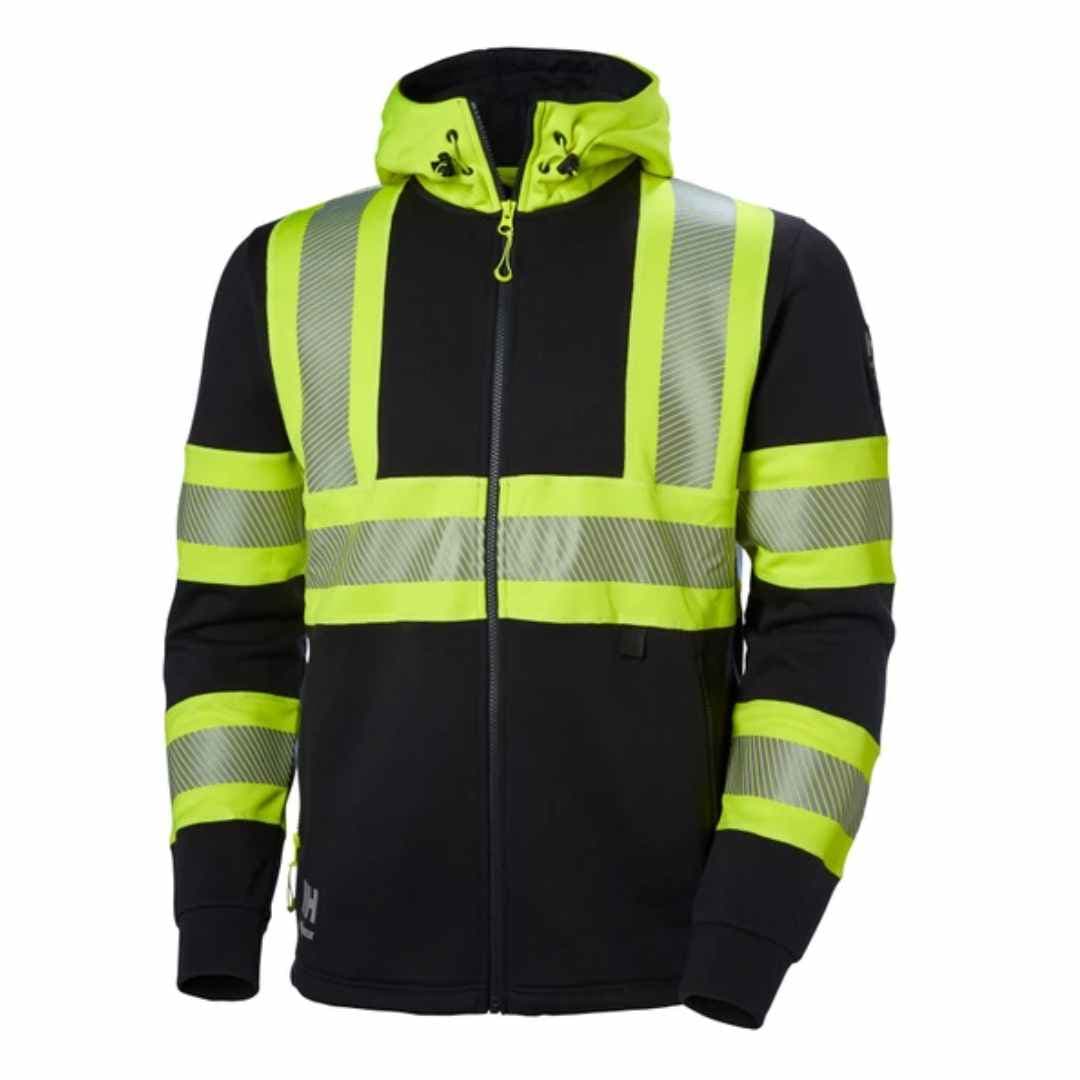
| ICU Hi Vis Hettejakke | Helly Hansen Workwear | Class 1. Cotton blend, adjustable hood | Mid layer, warehouse and workshop | 1 999 kr |
| ICU Hi Vis Construction Pant | Helly Hansen Workwear | Class 1, EN 14404 (knee pads). 4-way stretch, detachable holster pockets | The trouser part of a combination | 2 686 kr |
| ICU Hi Vis Håndverkerbukse | Helly Hansen Workwear | Class 2, EN 14404. 4-way stretch, holster pockets | When the trousers alone need to provide class 2 | 2 686 kr |
| ICU Hi Vis Softshell | Helly Hansen Workwear | Class 3 (size M) / class 2 (size S). Detachable sleeves, water-repellent | Spring, autumn and as a layer under a shell | 2 499 kr |
| Alna 2.0 Hi Vis Regnjakke | Helly Hansen Workwear | Class 2/3 by size, EN 343. Soft PU, neoprene cuffs | Rain and sleet, fishing and harbour | 2 249 kr |
| UC-ME Winter Jacket | Helly Hansen Workwear | Class 3, EN 342, EN 343 (class 3,1) | Our most affordable class 3 winter jacket | 2 874 kr |
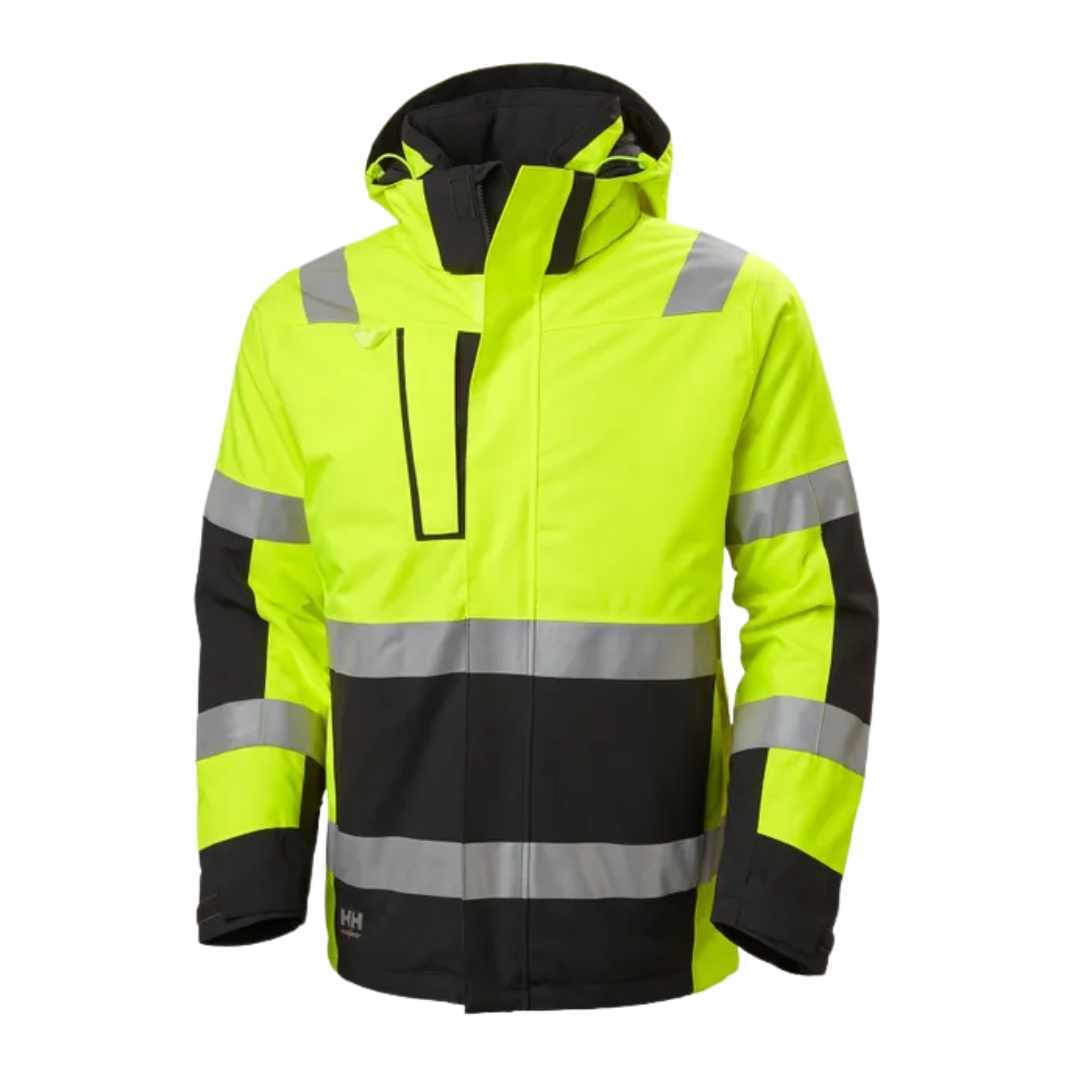
| Alna 2.0 Winter Jacket | Helly Hansen Workwear | Class 2/3 by size, EN 342, EN 343. Helly Tech membrane, Polartec insulation, helmet-compatible hood | Winter work on roads and construction sites | 3 749 kr |
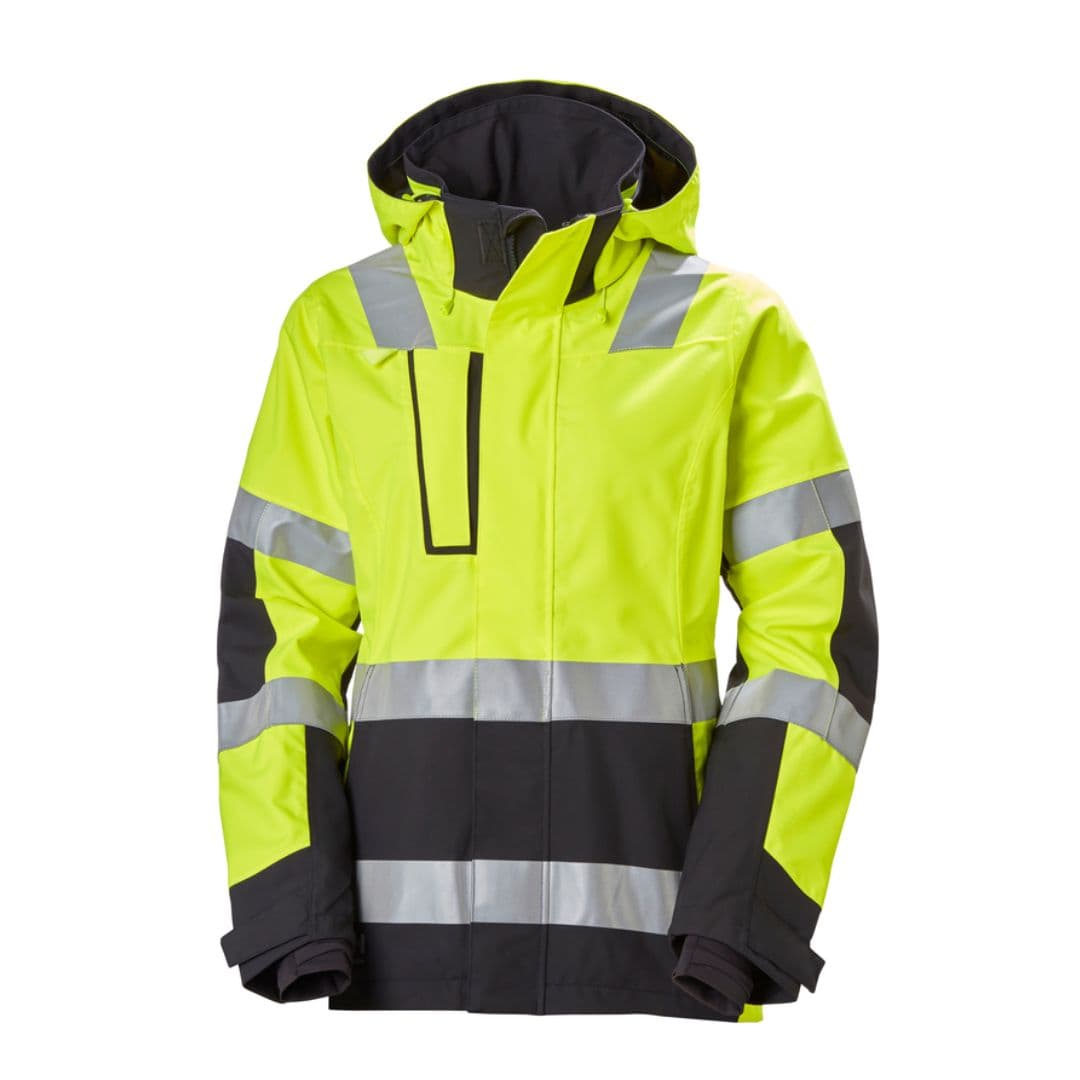
| Luna Hi Vis Winter Jacket (women's) | Helly Hansen Workwear | Class 2, EN 342, EN 343 (class 4,1). Women's fit, Primaloft | Winter jacket in a women's model | 3 749 kr |
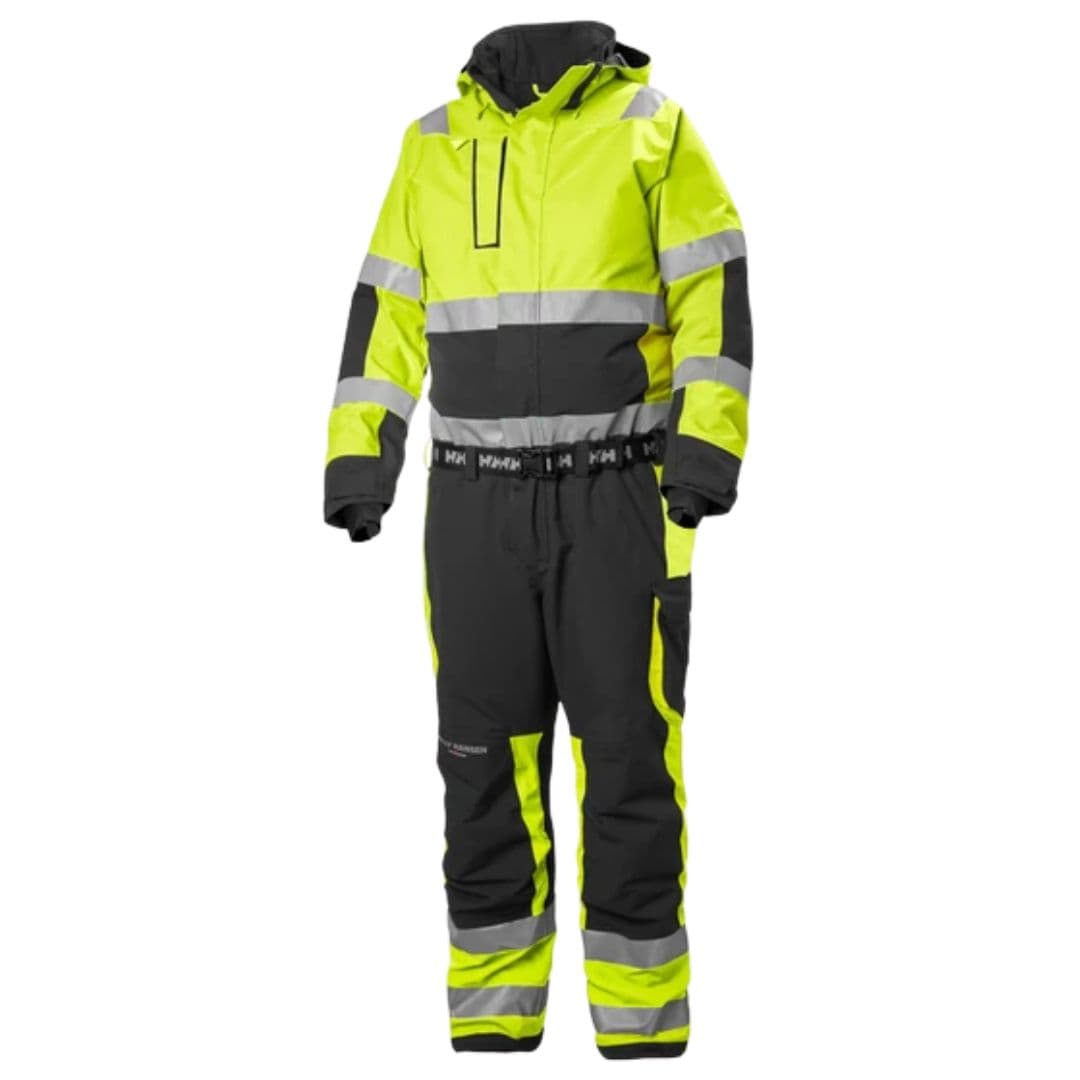
| Alna 2.0 Hi Vis Fôret Vinterkjeledress | Helly Hansen Workwear | Class 3, EN 342, EN 343, EN 14404. Helly Tech membrane, Polartec insulation | Class 3 in a single garment, all winter | 6 186 kr |
The full range can be found under hi-vis jackets, hi-vis trousers, hi-vis women's and vests.
How to keep a garment's certification
- Wash according to the care label. Reflective and fluorescent properties are tested after a stated number of washes. Some manufacturers print this number on the label. Fabric softener and excessively high temperatures shorten the garment's lifespan.
- Keep it clean. Dirt and oil reduce both colour brightness and reflectivity.
- Do not cover it up. Tool belts, fall harnesses and rucksacks conceal surface area. The garment must be closed for the certification class to apply.
- Logos and prints must be planned carefully. Printing on the fluorescent panel reduces the area and can drop the garment by one class. Let the supplier know the garment is hi-vis when you order a logo.
- Replace the garment when the colour has faded or the reflective tape has cracked. Compare it with a new garment if you are unsure.
For businesses
If several employees need hi-vis workwear with a logo, Bedriftssenteret in Kvaløyvegen 329 can help you choose the right class and find garments that are certified together. Business customers receive a corporate discount and can pay by invoice. See the business pages and HSE requirements for workwear and protective equipment. Private customers have a 30-day open purchase right and free delivery on orders over 899 kroner.