Proper shoe care is not just about appearance – it determines how long your shoes stay waterproof and comfortable. Here is a straightforward guide to washing and waterproofing both Gore-Tex shoes and shoes without a membrane.
Proper shoe care is not just about appearance – it determines how long your shoes stay waterproof and comfortable. Here is a straightforward guide to washing and waterproofing both Gore-Tex shoes and shoes without a membrane.
In brief
- Gore-Tex shoes: brush off dirt, rinse and wash by hand in lukewarm water. No washing machine.
- Waterproof when water stops beading — using a water-based spray. Never wax or grease on Gore-Tex.
- Leather shoes without a membrane: clean, allow to dry, and treat the leather with wax or leather cream.
- Dry at room temperature. Never on a radiator or by a fireplace. Shoe dryers that blow air are fine.
- Clean shoes first: waterproofing does not bond well to dirt.
What should you use on which shoe?
| Shoe type | Cleaning | Protection | Avoid | From stock |
|---|---|---|---|---|
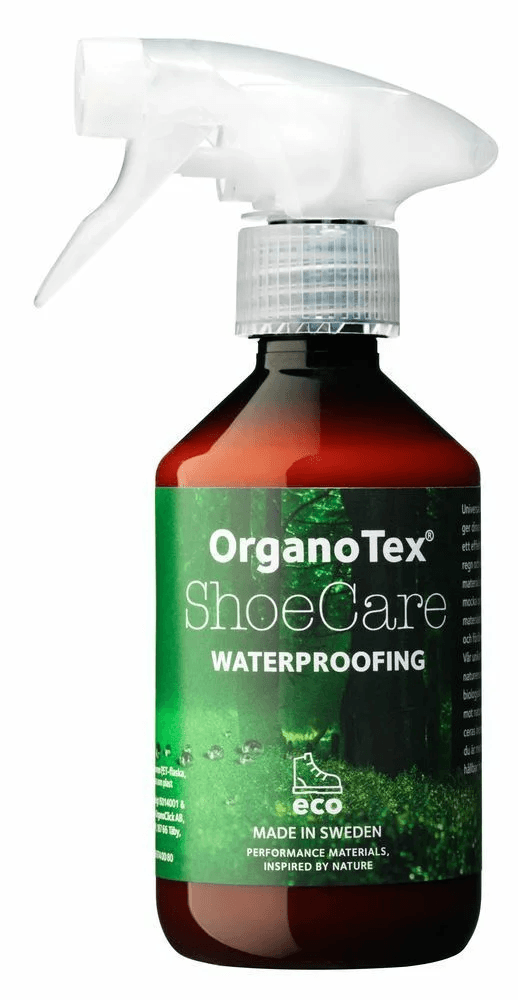
| Textile/synthetic with Gore-Tex | Brush, lukewarm water, mild liquid detergent | Water-based waterproofing spray | Washing machine, wax, grease, direct heat | OrganoTex Shoecare Waterproofer (169 kr) |
| Leather with Gore-Tex | Brush and damp cloth | Follow the shoe manufacturer's instructions — often a spray or the manufacturer's own care product | Wax and grease that block pores | OrganoTex Shoecare Waterproofer (169 kr) |
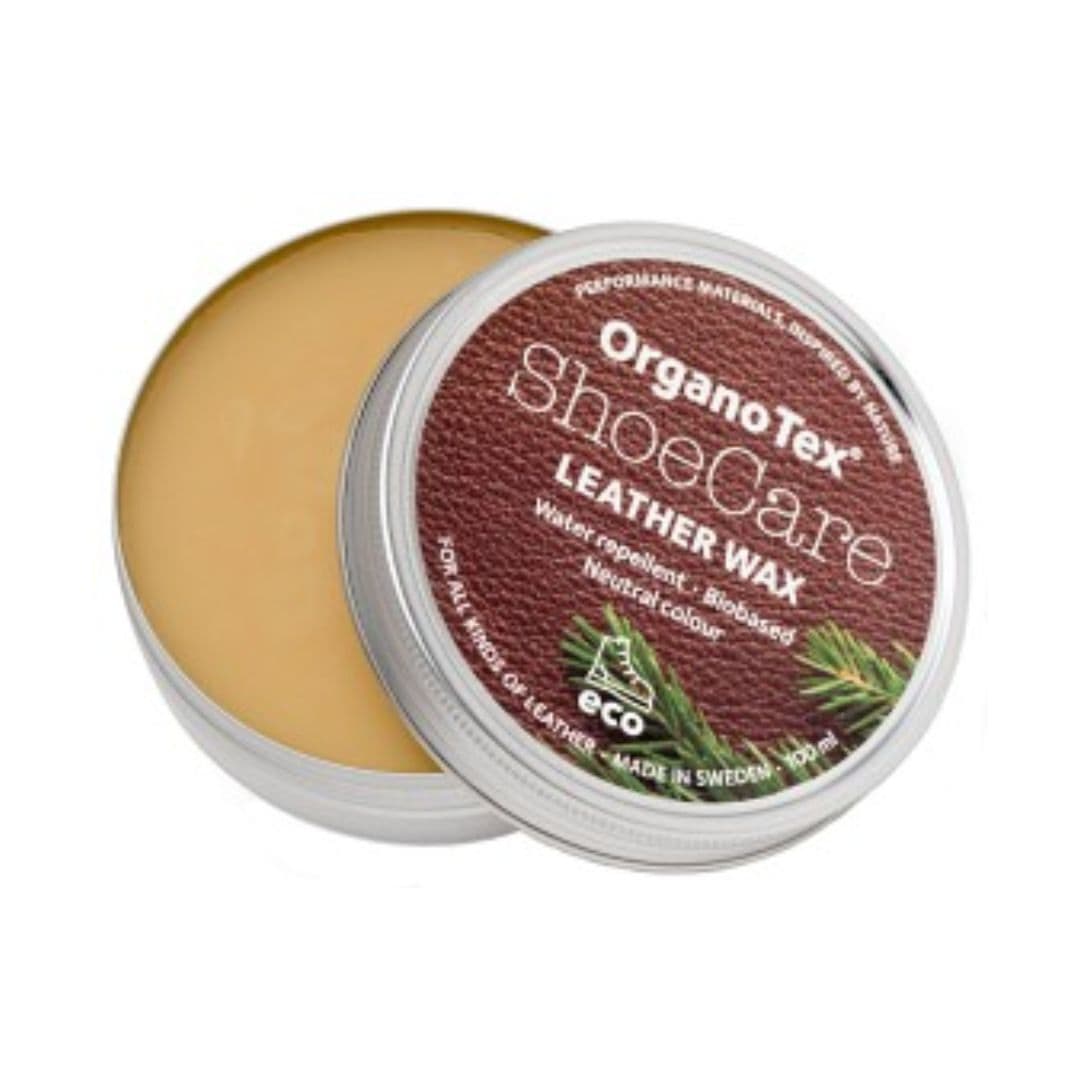
| Leather without a membrane | Brush, damp cloth | Wax or leather cream | High heat when drying | OrganoTex ShoeWax (149 kr) |
| Textile/suede without a membrane | Brush, lukewarm water | Waterproofing spray | Wax (makes suede stiff) | OrganoTex Shoecare Waterproofer (169 kr) |
| Safety boots | Daily brushing, remove chemicals and salt | As for the material above | Drying on a radiator | As for the material above |
Products in the table: OrganoTex Shoecare Waterproofer · OrganoTex ShoeWax Leather Wax. Find more under waterproofing and care.
Why shoes need maintenance
All boots and shoes – whether made of leather, textile or fitted with a membrane such as Gore-Tex – should be treated and maintained regularly. If water penetrates the outer material and reaches the foot, the shoe becomes heavy, difficult to dry and, in the worst case, may lose its shape or develop mould. Regular waterproofing and proper washing prevent this and significantly extend the life of the shoe.
How to care for shoes with a membrane
Gore-Tex and similar membranes are both waterproof and breathable. The membrane keeps water out even when the outer surface material of the shoe is not waterproof in itself – but the outer surface treatment (DWR) wears down over time and must be renewed for the shoe to perform at its best.
How to wash Gore-Tex shoes:
- Brush off loose dirt and mud with a soft brush or damp cloth.
- Remove the insole and rinse away sand and grit, including from inside the shoe.
- Wash by hand in lukewarm water with a little unscented liquid detergent. Do not wash Gore-Tex shoes in a washing machine — Gore themselves advise against it.
- Avoid bleach, stain removers and oil-based products, as these can damage the membrane.
- Allow the shoe to dry at room temperature. Avoid direct heat from radiators and fireplaces. A shoe dryer that blows air is fine. Fill the shoe with newspaper to help it keep its shape.
When should you waterproof? When water no longer beads and runs off the surface, this is a sign that the water-repellent treatment has worn off and should be renewed. Use a spray-based, water-based waterproofing treatment – never wax or grease, as these can block the pores and impair the breathability of the membrane.
Gore recommends a water-based product in a pump spray. If the shoe has leather, also follow the shoe manufacturer's instructions.
How to care for shoes without a membrane
Shoes without a membrane – typically lighter hiking shoes, safety boots or everyday shoes in leather or synthetic material – require just as much attention, but in a slightly different way.
For leather shoes:
Leather needs nourishment as well as water repellency to stay supple over time. Apply a water-based wax or leather cream, for example OrganoTex ShoeWax Leather Wax (149 kr), once the shoe has been cleaned and dried. Waxing provides both protection and flexibility in the material, and prevents the leather from cracking or stiffening. If the leather shoe has Gore-Tex or another membrane, follow the shoe manufacturer's instructions.
For shoes made from synthetic materials or textiles:
Spray or liquid waterproofing works best here, for example OrganoTex Shoecare Waterproofer (169 kr). Unlike wax, these products do not soften the material, and can therefore be applied more frequently as part of regular maintenance. Waterproofing sprays of this kind are also the best option for combination materials, such as split leather and textile together.
General advice for both types:
- Clean the shoes thoroughly before waterproofing – waterproofing applied to dirty shoes does not bond well.
- Allow the shoes to reach room temperature before waterproofing, so that the pores in the material open up and the treatment is absorbed more effectively.
- Never dry shoes using high heat. This can damage both leather and glue, and is particularly harmful to Gore-Tex membranes.
How to dry wet shoes properly
It is wet shoes that most often damage glue, leather and shape – not the rain itself.
- Remove the insole and loosen the laces completely to allow air to circulate.
- Fill the shoe with newspaper, and replace it after an hour or two when it has become saturated.
- Leave the shoe to dry at room temperature, ideally with a fan. Do not place it on a radiator, in front of a fireplace, or on underfloor heating cables.
- If you use a shoe dryer, choose one that blows air at room temperature or slightly warm air.
- Allow your shoes a full day between uses when you can. Two pairs of safety shoes used in rotation will last longer than one pair that never gets the chance to dry out.
Safety shoes: extra reason to keep on top of maintenance
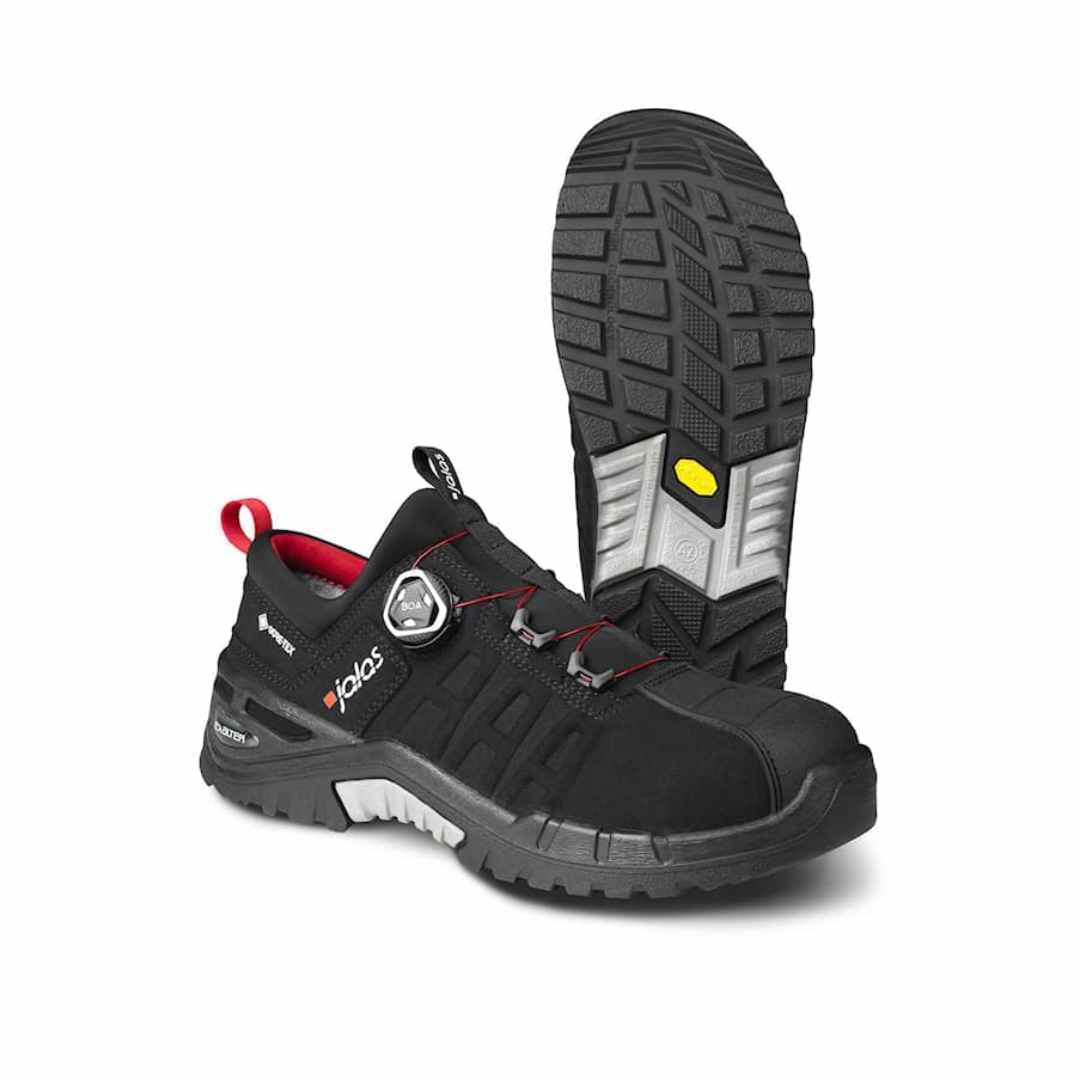
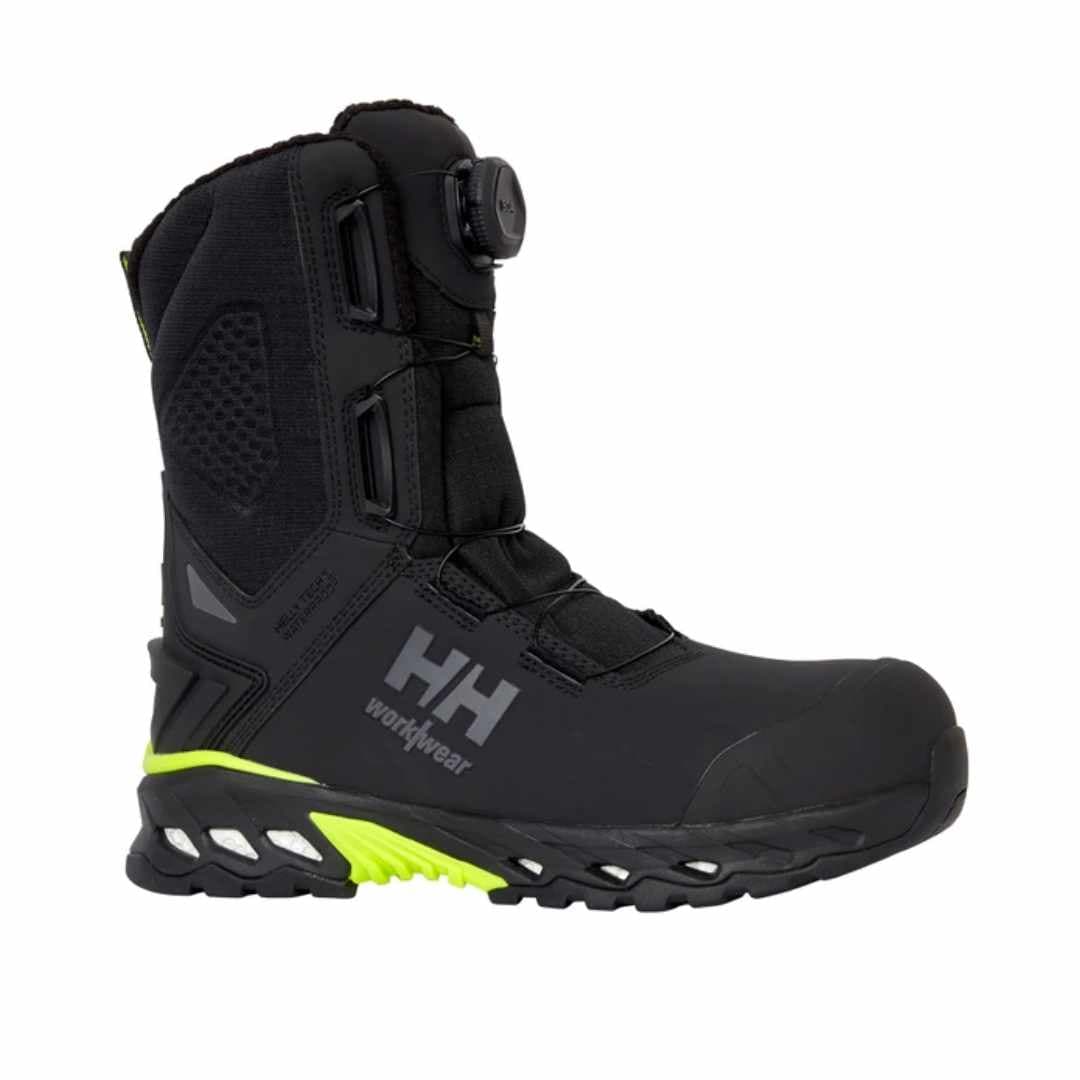
If you wear safety shoes at work, they are often subjected to harder wear than ordinary hiking boots – mud, moisture, chemicals and long working days all take their toll. Regular cleaning and waterproofing helps to maintain both comfort and protective performance for longer. If you also use hi-vis or other certified protective clothing, you can read more in Hi-vis class 1, 2 and 3 explained.
Replace the insole when it has gone flat or remains damp all the time – see insoles for safety shoes. Safety shoes can be purchased at Bedriftssenteret in Kvaløyvegen 329 or in the online shop; see also Safety shoes: the safety classes explained.
Summary
Whether or not your shoes have a Gore-Tex membrane, the principle is the same: clean thoroughly, waterproof regularly, and avoid rapid drying with high heat. With a little consistent routine, hiking boots and safety shoes will remain waterproof, comfortable and functional for many seasons to come.
Browse our range of waterproofing and wash products, women's shoes, men's shoes and safety shoes.