Northern Norwegian weather makes different demands on hiking trousers than the forests around Oslo. Here is the overview: which type of hiking trouser suits your trip, what wind and water resistance actually means, and where to find the right model and fit in Tromsø.
Northern Norwegian weather makes different demands on hiking trousers than the forests around Oslo: more wind, faster changes in conditions and a longer shoulder season with sleet. Here is the guide we use when helping customers in our shops in Tromsø.
In brief
- Softshell trousers are the first choice for most hikes around Tromsø: windproof, breathable and able to handle light precipitation.
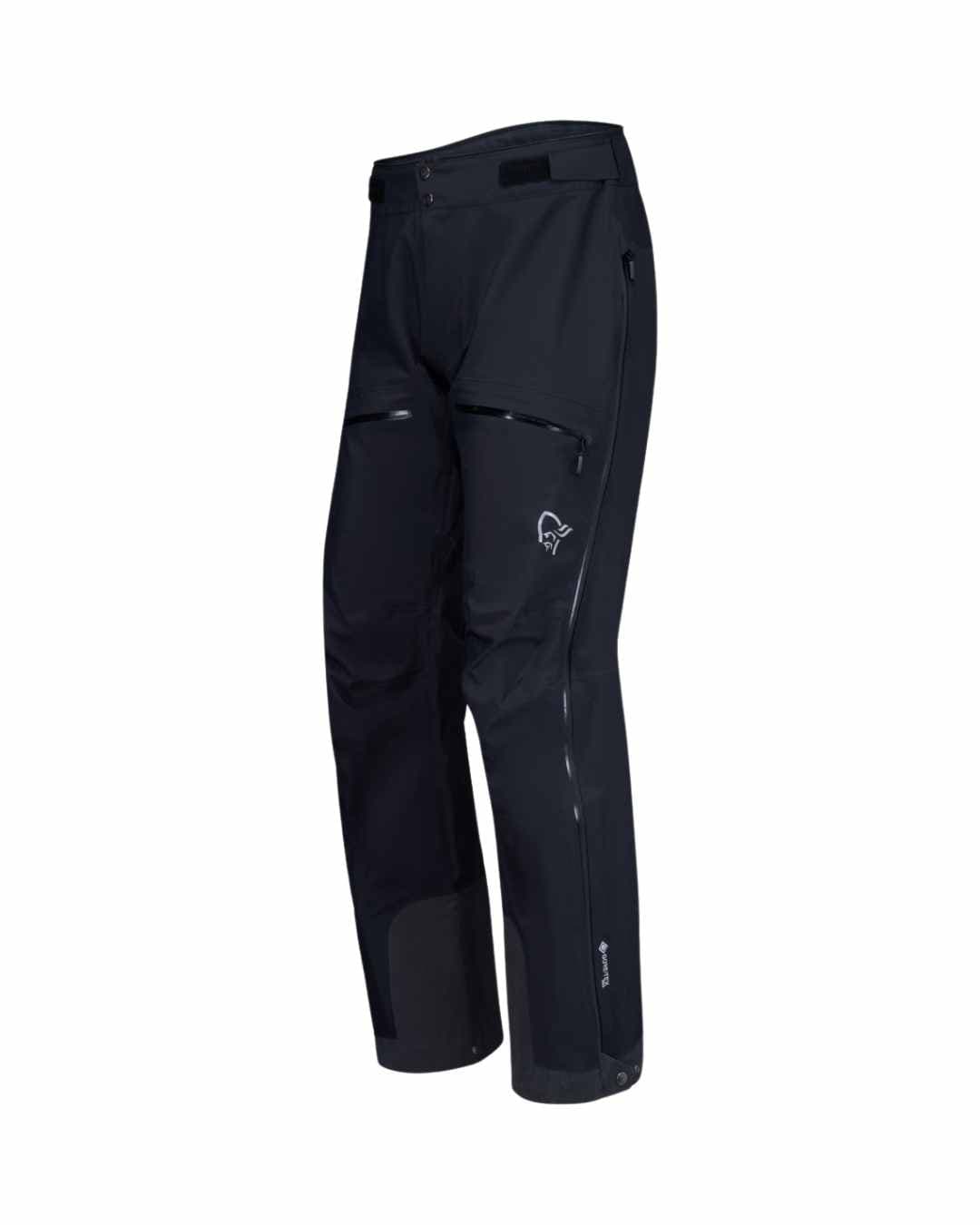
- Shell trousers are what you need when it actually rains, and for winter trips. Look for a side zip so they can be put on over your shoes.
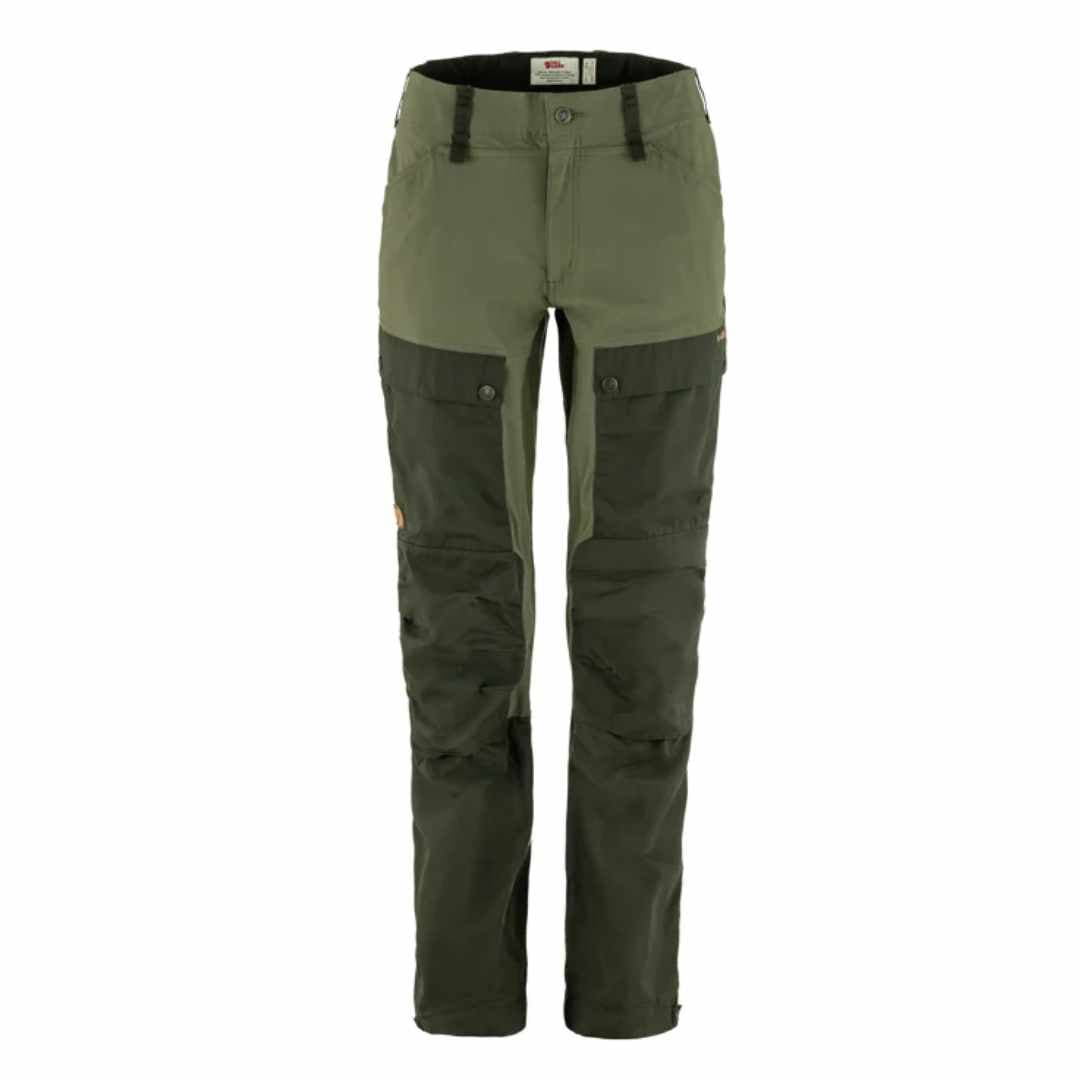
- Durable trekking trousers (such as Fjällräven's G-1000) withstand scrub and campfire sparks best, but are heavier and dry more slowly.
- Look for stretch and freedom of movement, reinforcements at the knees and ankles, and a fabric that dries quickly.
Why hiking trousers — aren't jogging bottoms or jeans enough?
Ordinary trousers are not made to move with you or to withstand the weather. Hiking trousers differ from everyday trousers in several key ways:
- Freedom of movement — a gusset (a gusset panel in the crotch) and stretch material that follows your movements when you climb over rocks or take long strides.
- Weather and wind protection — many hiking trousers are windproof or water-repellent, whereas a cotton trouser becomes heavy and cold as soon as it gets wet.
- Drying time — technical fabrics dry much faster than cotton, which means less time in cold, clammy trousers on the trail.
- Durability — reinforced fabric in high-wear areas such as the knees and inner ankle withstands rocks, scrub and crampons better than ordinary cloth.
Which type of hiking trouser do you need?
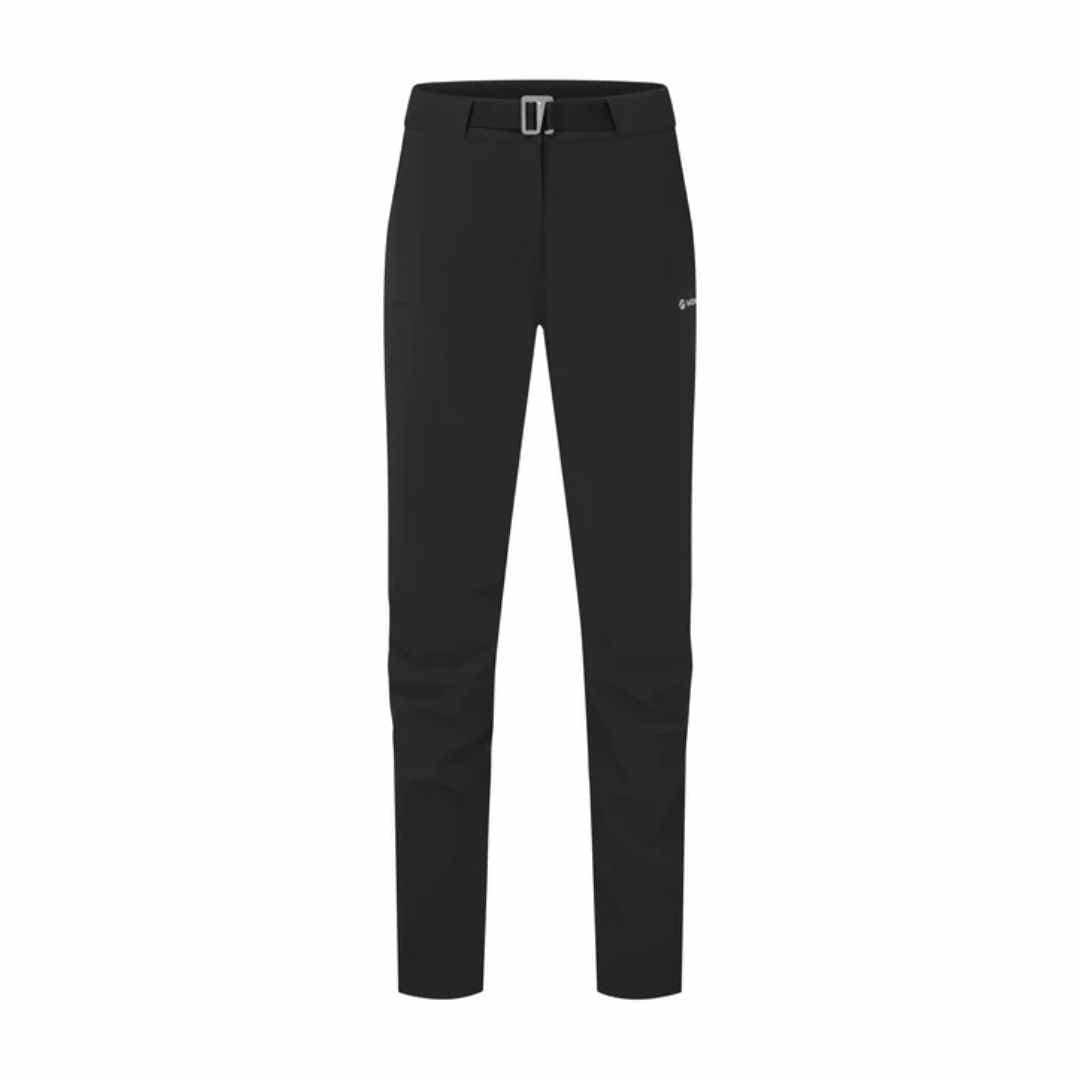
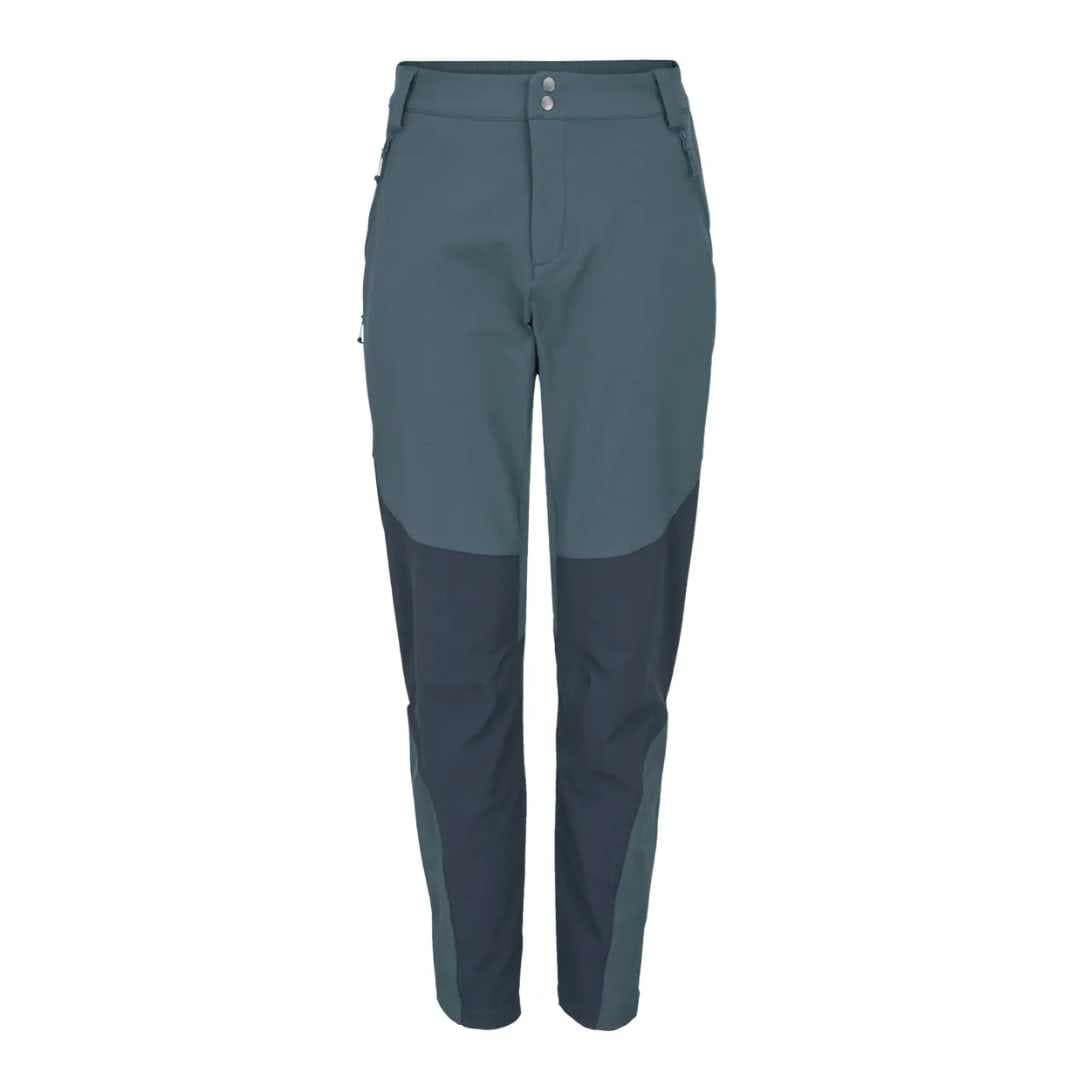
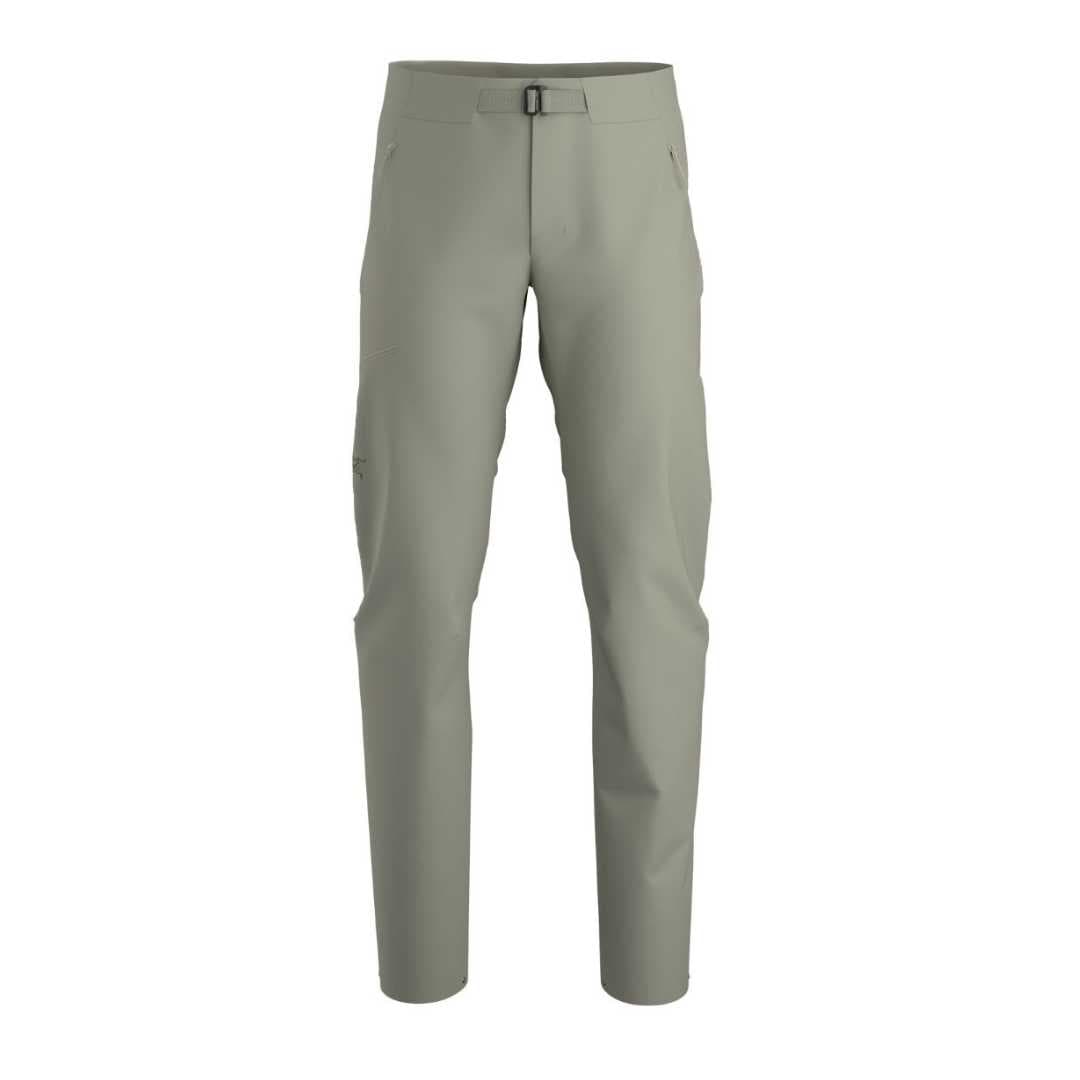
Softshell trousers — the first choice for most people around Tromsø. Windproof enough for mountain ridges, breathable on the approach and able to handle light precipitation. Softshell is made from a tightly woven, often slightly elasticated fabric that combines windproofness with freedom of movement — it replaces both ordinary trousers and a thin outer layer on most trips. Typical choices in our range: Norrøna Falketind Flex1 and Arc'teryx Gamma.
Shell trousers — when it actually rains, or for summit trips in spring and winter. Waterproof with taped seams (Gore-Tex or equivalent), and thinner and lighter than softshell since they are intended to be worn over other clothing. Look for a full or three-quarter side zip so you can get them on and off with shoes and crampons on.
Durable trekking trousers — cotton/polyester blends such as Fjällräven's G-1000 withstand scrub, rocks and campfire sparks better than technical fabrics. Heavier and slower to dry than softshell or shell trousers — best for forest hikes, hunting and campfire outings, not summit trips.
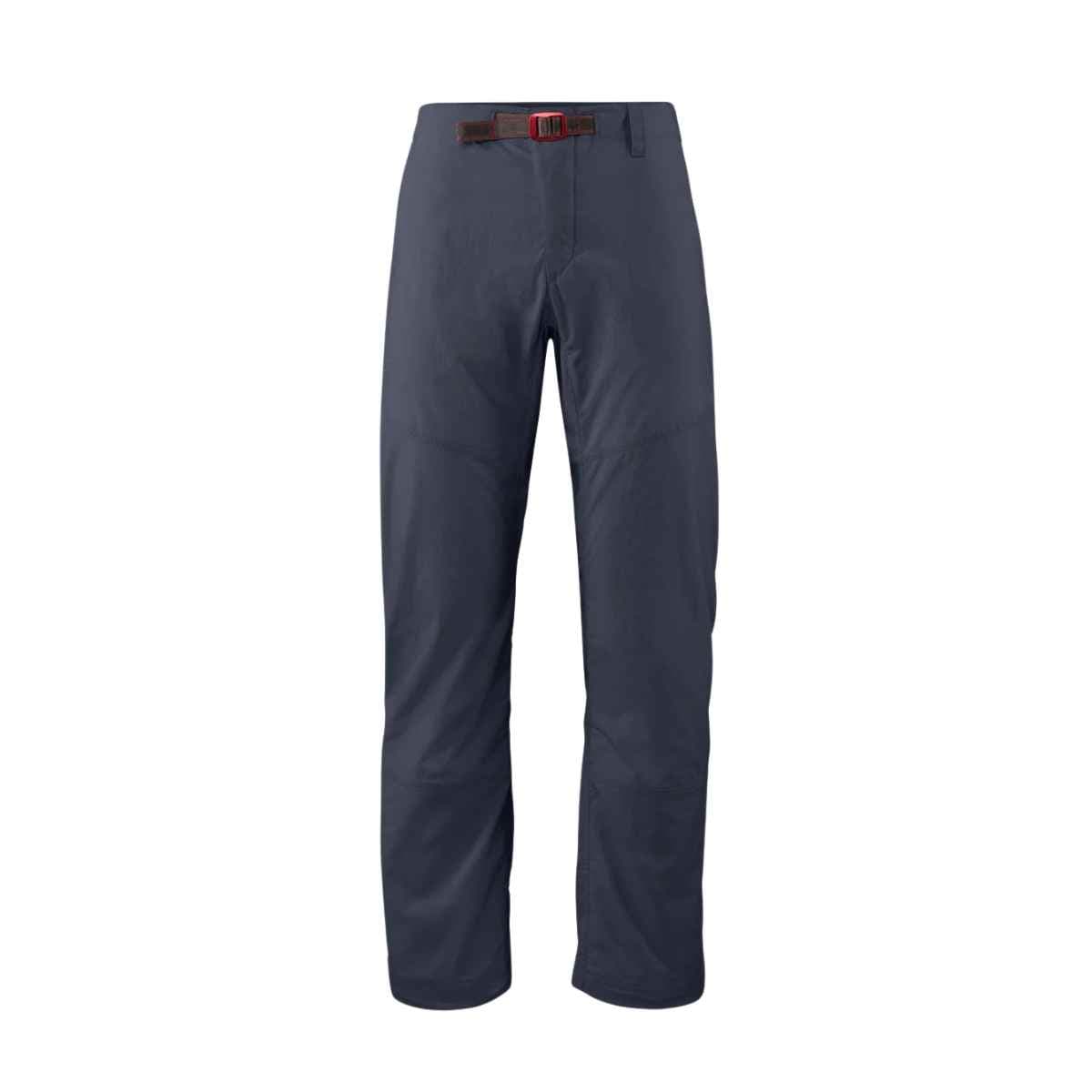
Leisure/everyday stretch trousers — for everyday hikes on Fløya or around Prestvannet, a light stretch trouser goes a long way. Less specialised, but comfortable and versatile enough for most easy outings.
Materials and technology — briefly explained
- DWR (Durable Water Repellent) — a treatment on the surface that makes water bead off. All softshell and shell trousers should have this, but the treatment wears off and should be reapplied at regular intervals.
- Membrane (Gore-Tex and others) — a thin layer inside shell trousers that stops water from outside whilst allowing moisture from the body to escape. Provides waterproofness without leaving you wet from sweat on the inside.
- Softshell weave — tightly woven, often with a small amount of stretch, giving windproofness and freedom of movement in a single trouser.
- Ripstop — a reinforced weave pattern (often visible as a grid in the fabric) that prevents the fabric from tearing further even if it receives a small cut or hole.
What matters most in practice
- Wind before rain. Around Tromsø, wind is the most common reason a trip turns cold. A windproof softshell covers 80 % of days; the shell trouser takes care of the rest.
- Fit with a layer underneath. Try the trousers on with wool long johns — in practice, that is how they are worn from October to May. Hiking trousers are often cut more generously in the thigh than everyday trousers, precisely for this reason.
- Ventilation. Thigh zips are worth having on trips with a demanding approach, and let you air out without taking the trousers off.
- Reinforcements. Lower leg and inner ankle reinforcements protect the trousers from cuts caused by crampons and ski edges, and reinforced knees and seat withstand more in rough terrain.
- Size and gender. Women's and men's models are cut differently at the hips, waist and inner leg length — choose the model based on your body shape, not just the label.
Where do you buy hiking trousers in Tromsø?
At Jobb og Fritid you will find hiking trousers from Norrøna, Arc'teryx, Patagonia, Fjällräven, Klättermusen, Rab and Montane:
- Jobb og Fritid Jekta (Karlsøyvegen 10, Jekta area) — largest selection, open until 21:00 on weekdays and 18:00 on Saturdays.
- Jobb og Fritid Veita (Storgata 102, town centre) — a curated range in the heart of the city.
We are happy to help you with fit and layering in store, and the full range is available at jobbogfritid.no with free delivery on orders over 899 kr.
Frequently asked questions
How much does a good pair of hiking trousers cost? Softshell trousers from quality brands typically cost 1500–2500 kr, shell trousers 2000–4500 kr. A good pair will last many seasons.
Can I use the same trousers all year round? A softshell with room for wool long johns underneath covers most conditions from March to November. In midwinter, many people prefer insulated trousers or shell trousers with wool underneath.
What size should I choose? Your normal size if you plan to wear a thin layer underneath; consider going one size up if you use thick long johns. Come in and we will try them together.
Do I need both softshell and shell trousers? Not necessarily to begin with. Most people around Tromsø get along well for a long time with one good pair of softshell trousers, and add shell trousers when they do more summit trips or spend a lot of time out in the rain.
In summary
Choose softshell as your everyday trousers for most trips around Tromsø, shell trousers when you know it will be wet, and a hardwearing trekking trouser if you spend a lot of time in scrub and forest. Always try the trousers with the layer you actually intend to wear underneath, and feel free to pop into Jobb og Fritid Jekta or Veita and we will help you with both fit and choice of model.
Sources
- Norrøna – falketind flex1 Pants — softshell trousers with stretch, wind resistance and water repellency
- GORE-TEX – How GORE-TEX works — membrane, taped seams and DWR
- GORE-TEX – Restore the DWR of your raingear — renewing the water-repellent treatment
- DNT – Fjellvettreglene — be prepared for bad weather and cold, even on short trips
- Yr – Tromsø, historikk med normaler — how cold it is for much of the hiking year
Last reviewed 19.10.2026.