Dirty down clumps together and insulates poorly – but with the right washing, waterproofing and drying, you can extend the life of your down jacket by several years. Here is a straightforward guide to doing it correctly.
Down jackets are among the most effective insulating layers you can own, but the down deteriorates quickly if it is not cared for properly. Dirty down clumps together, loses loft and insulates poorly – whereas correct washing and waterproofing can extend the life of your jacket by several years. Here is a straightforward guide to doing it right.
In brief
- Use a down-specific detergent, never ordinary detergent or fabric softener.
- A gentle programme following the care label (manufacturers recommend 30–40 degrees), and preferably an extra rinse.
- Dry thoroughly in a tumble dryer on low heat with two or three dryer balls, until the down is fluffy and free of clumps. This takes several hours.
- Wash only when needed, and store the jacket loosely and in a dry place between seasons, not compressed.
Why down requires special care
Down insulates because it is airy and fills with small pockets of air that retain warmth. Ordinary detergent leaves residues that cause the down to absorb water, and fabric softener damages the down. The result is a jacket that clumps together, looks flat and lifeless, and insulates poorly. If you use a detergent made specifically for down, however, you retain both loft and thermal performance.
What you need
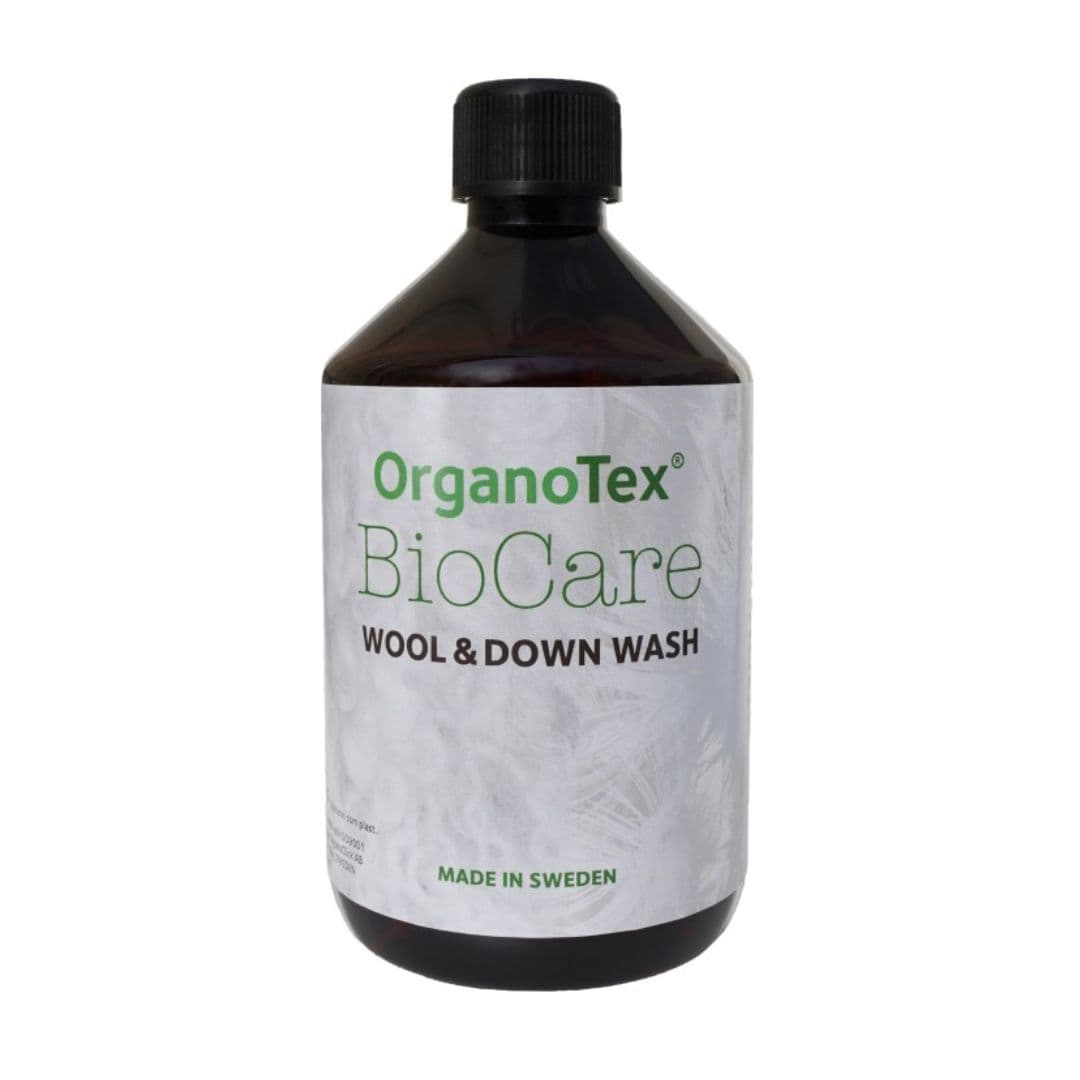
- A down-specific detergent, for example Nikwax Down Wash Direct or OrganoTex BioCare Wool & Down Wash
- A waterproofing treatment for down, for example Nikwax Down Proof or OrganoTex Wash-In/Spray-On Waterproofing
- Washing machine
- Tumble dryer (recommended) or plenty of time for air-drying
- A few clean tennis balls or dryer balls
Step 1: Prepare the jacket
Close all zips, hooks and hook-and-loop fastenings. Check the pockets and remove any loose items. If the jacket has visible stains, you can pre-treat them lightly with the detergent and a soft brush.
Step 2: Wash on the correct programme
Use a gentle programme (a down programme if your machine has one) and follow the care label – manufacturers recommend 30–40 degrees. Follow the dosage instructions on the bottle of the detergent you are using. For reference: Nikwax Down Wash Direct is dosed at 100 ml per wash, whilst OrganoTex BioCare Wool & Down Wash is dosed at 25 ml for soft water and 40 ml for hard water per wash of 2–4 kg. Run an extra rinse cycle, as Norrøna and Arc'teryx recommend, to ensure all detergent is removed. Never use ordinary detergent or fabric softener.
Step 3: Waterproof at the same time or afterwards?
If your jacket has an outer membrane or surface treatment (DWR), you should waterproof it after washing to restore water repellency – a good sign that this is needed is when water no longer beads off the jacket. Many down detergents combine washing and waterproofing in a single product, but you can also waterproof as a separate step using a down-specific product, for example Nikwax Down Proof or OrganoTex Wash-In/Spray-On Waterproofing. Always follow the instructions on the bottle for the correct dosage and temperature.
Step 4: Dry thoroughly – this is the most important step
Damp down clumps together and can become mouldy if it is not dried completely. Place the jacket in a tumble dryer on low heat together with 2–3 dryer balls or clean tennis balls. The balls break up the clumps that form and restore the down's loft as it dries. This can take several hours – check regularly and feel for clumps in the jacket. The jacket is ready when the down is evenly distributed and fluffy again.
If you do not have a tumble dryer, you can air-dry the jacket lying flat, but you must manually shake and break up clumps in the down several times a day until it is completely dry. This takes considerably longer and often gives a poorer result.
How often should you wash your down jacket?
Wash only when necessary – when the jacket smells, looks dirty, or seems less warm than usual. Unnecessary washing wears out the down.
Storage between seasons
Down jackets should never be compressed in a stuff sack for extended periods. Hang the jacket loosely in the wardrobe or store it unpacked in a dry place. Compression over time causes the down to lose its loft and insulate less effectively.
Summary
Correct washing comes down to three things: use products made specifically for down, avoid ordinary detergent and fabric softener, and dry thoroughly with dryer balls to restore the loft. Follow this routine and your down jacket will stay warm and fluffy season after season.
Sources
- Arc'teryx – Down wash instructions — down-specific detergent, double rinsing and tumble drying with dryer balls
- Norrøna – Washing and care — gentle programme, two rinse cycles and drying with tennis balls
- Nikwax – Down Wash — why ordinary detergent is not suitable, and dosage
- Nikwax – Down Proof — waterproofing of down jackets after washing
- OrganoTex – BioCare Wool & Down Wash — dosage according to water hardness
Last checked 19.10.2026.